A ceramic mug factory audit usually begins in the showroom: the sample wall, the certificates, the coffee. None of it is evidence. A showroom shows what a plant can do on a good day; your order will run on an ordinary day in a busy month, alongside other clients’ artwork.
This guide is for importers, brand owners and sourcing teams verifying a factory before committing to a program. It covers the documents to request before you travel, the parts of the plant that affect your batch, and the difference between a red flag and normal ceramic practice.
A ceramic mug factory audit is document verification first and a plant tour second.Key takeaways
- Audit the batch, not the showroom: trace one shipped order from material lot to carton.
- Request six documents before you travel: test reports, social audit, FSC, quality manual, batch records and photo QC.
- Colour is measured: a factory that logs colour difference per batch against a signed master sample has a system.
- Three gates matter: pre-production approval, in-process checks at four stations, and final inspection with a drop test.
- Production runs 30–45 days after sample approval, so a slow audit has a ship-date cost.
1. Audit the batch, not the showroom
At a glance: the useful question is not what a factory can make, but what evidence exists that a specific batch met the approved standard.
Ask for a completed order that resembles yours: same body, comparable decoration, shipped within the year. Request the file by purchase order number and give a day’s notice. Then follow the paper from material lot to carton. A working system can rebuild that file quickly, because the records were made during production.
Our batch files hold the approved master sample reference, in-process checks at forming, glazing, printing and firing, kiln records, final inspection results and the photo QC report. If a supplier cannot name the equivalent documents in their own process, the audit has already told you something.
2. Request the documents before you travel
At a glance: half an audit can be done from your desk, and the document pack tells you whether the trip is worth the fare.
A ceramic mug factory audit starts with one email: a short list and a deadline. What arrives, how fast and how completely is a data point. A supplier who sends certificates but no batch records is telling you which buyers their system was built for.
| Document | What it shows | What to check |
|---|---|---|
| Food-contact test report | Glaze and decoration tested as a finished article | Legal entity, standard, issue date, decoration covered |
| Social audit report | Labour performance at a named site | Site, audit date, rating, open findings |
| Quality manual and inspection plan | Checks defined before, during and after production | Named checkpoints, sign-off, hold rules |
| Batch traceability record | A shipped order can be reconstructed | Material lot, print run, kiln load, carton mark |
| Photo QC report | Condition of the goods before shipment | Date, quantity, defect photos, sample angles |
| Certificates and disclosures | Systems and material sourcing | Issuing body, scope, validity, site covered |
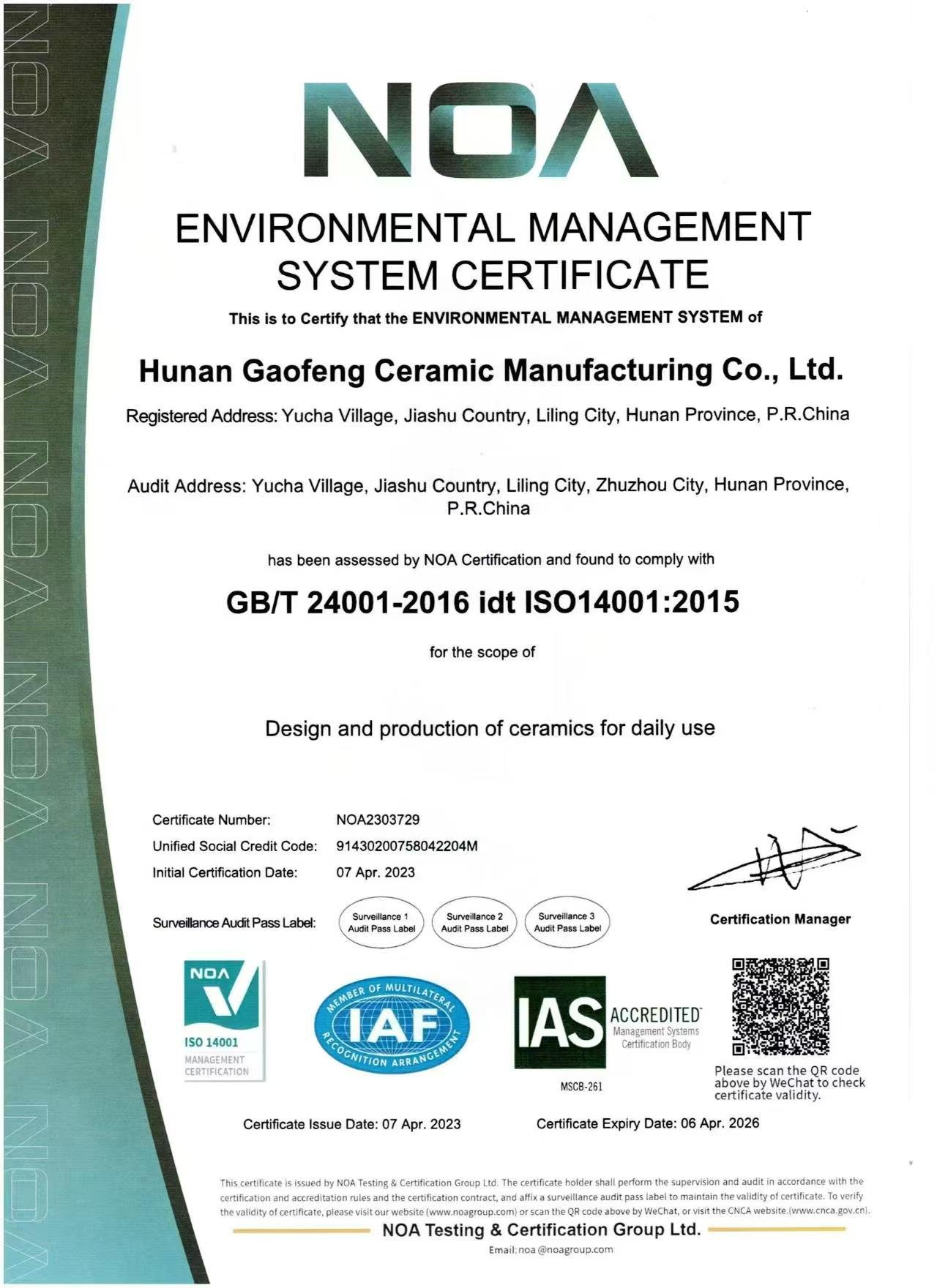
A certificate is not a licence: FSC covers the paper in your box, not the mug. And a test report should name the legal entity that will make your goods, because a report held by a trading company may describe another site. If the pack arrives incomplete, ask once with a specific example; suppliers with a real system send a redacted batch file, and those without offer a site visit instead.
3. Walk the line in process order
At a glance: follow the mug from forming to firing; each station is a place where a defect can enter, and each should have a check that catches it.
Walk in process order. At forming, look at wall thickness, rim level and the handle join. At glazing, look at coverage, a clean foot ring and labelled glaze batches. At printing, look at decal application or screen alignment against the handle. At firing, ask for the kiln log and the third-fire record for decorated ware.
The details that separate a system from a demonstration are the last record and the rejected piece. Ask for yesterday’s in-process sheet: who signed it, what was measured, and what happened to the units that failed. A supervisor who can explain a reject bin gives you more than a tour.

4. Test the colour records against your approved sample
At a glance: colour control is a measurement discipline; without readings per batch against a signed reference, colour is an opinion.
A master sample is only useful if it is controlled. Ask where it is kept, whether it is signed and dated, and how it is protected from daylight. Then ask how production is compared with it: which instrument, how many pieces per batch, and what happens when a reading drifts outside the agreed tolerance.
ΔE expresses that drift as a number, and on most ceramic programs a ΔE of about 1–2 is usually below the limit of visible difference; a trained eye may only catch it in good light, so agree the band in writing. The value matters less than the habit: a log with batch numbers, readings and a signature is evidence; a colour-matched sticker on the wall is decoration.
| Area | What to ask | What good practice looks like |
|---|---|---|
| Sample room | Where is our approved master sample kept? | A dated, signed reference per design, stored away from daylight |
| Materials store | How are clay, glaze and decal lots labelled? | Lot numbers on containers that match the batch record |
| Decoration | How is print position checked? | A registration check at the start of each run and at intervals, logged |
| Kiln | Can you show the firing curve for the last load? | Time, temperature and load recorded per firing, including the decal fire |
| Final inspection | What AQL applies, and who defines critical, major and minor? | An inspection plan agreed with the buyer, with defect photographs |
Notice what the checklist leaves out: the showroom, and the parts of the plant that never touch your product. Those are worth seeing if you have time; they are not where your batch is won or lost.
5. Follow one batch through three quality gates
At a glance: a credible factory separates pre-production approval, in-process control and final inspection, with a record at each gate and no gate skipped under deadline pressure.
Pre-production is where risk is cheapest to remove: artwork and technical assessment, material verification against the specification, and master-sample approval before capacity is booked. In-process control holds the batch to that standard at forming, glazing, printing and firing, with colour and print position logged. Final inspection proves it with dimensions, handle strength, a drop test in the packed carton, packaging checks and a photo QC report.
Ask what happens when a check fails. The answer should involve a hold, a cause and a disposition — rework, downgrade or scrap — not a decision to look at the next one. Ask what moves when a rush order meets a scheduled inspection; if the inspection moves first, the system is optional.
Care claims belong to the same trail: if a mug is sold as dishwasher or microwave safe, the claim has to match the decoration and firing, not the body alone. Our guide to dishwasher and microwave safety explains which finishes change the answer.
6. Separate red flags from normal practice
At a glance: some things that alarm first-time buyers are ordinary in ceramic production, and some tidy-looking practices are serious.
Ceramics is a dusty, hot, variable process. A plant that looks like a laboratory is not automatically better than one that looks like a factory. Judge the controls, and let the supplier explain what you are looking at.
| What you see | Normal practice | Red flag |
|---|---|---|
| Handwritten kiln log | Common on older kilns; the record matters more than the format | No log at all, or one completed the week of your visit |
| Shade variation between batches | Expected within an agreed colour tolerance | No measurement, or a tolerance nobody can state |
| Glaze dust around the line | Normal where glaze is sprayed; extraction controls it | Unlabelled glaze containers with no batch records |
| Subcontracted decoration in peak season | Common when capacity is tight, if traceability is kept | No disclosure and no link to your batch |
| A photocopied test report | Copies are normal; originals stay with the factory | A report number that does not match the product |
One signal never makes it onto a checklist: staff who cannot answer a question about their own station. A line supervisor who shows the sheet is worth more than a manager who explains the company.
7. Verify social, environmental and food-contact documents
At a glance: certificates are entry tickets, not guarantees; they describe an audited system on a date and only help if the scope matches your order.
BSCI and Sedex are often confused. BSCI is amfori’s social audit programme: it produces a report and a rating for a named site, with follow-up on findings. Sedex is a platform where audit reports and site data are shared; the audit behind it is usually a SMETA. A factory can sit on Sedex without a recent audit.
Higg FEM is a facility-level self-assessment of environmental performance, useful for tracking energy, water and waste year on year but not a certificate of compliance. ISO 22000 is a food-safety management system standard, and FSC covers the paper in your packaging. None of them tells you that a particular mug is safe for a particular market; that comes from a food-contact test report on the finished article, covering the decoration as well as the glaze.
Reports can be checked: the issuing laboratory can usually verify a report number, and the sample description should match your body, capacity and decoration. Our own documents — BSCI, Sedex and the Higg FEM self-assessment — are published for review, and food-contact reports are available on request. More guidance sits in our compliance and food contact column.
This article is general information, not legal advice. Confirm the applicable standard with your compliance team or lab.
8. How MugFactory de-risks an audit
MugFactory runs custom ceramic, bone china and stoneware mugs on exclusive Liling lines, with design, packaging, QA and export documentation handled by one in-house team. The plant has produced for export since 1994 and operates six production bases, ten branch factories and twenty kilns. An auditor sees one chain: the approved sample, the checks recorded while the batch ran, and the report sent before the container left. The Liling factory page shows the line, and Why MugFactory explains the team.
- Master-sample approval before production is scheduled, so the reference exists before the batch does.
- In-process checks at forming, glazing, printing and firing, with colour difference, print position and kiln records logged by batch.
- Final inspection with handle strength, a drop test, packaging checks and a photo QC report before shipment.
- FDA and LFGB test reports, plus BSCI, Sedex, FSC, Higg FEM and ISO 22000 documents, available on request.
- Batch traceability records per order and a 24-hour response during production.
See the line your order will run on
If you are shortlisting factories, walk the line in process order — sample room, printing, kiln, final inspection — before you commit. We host buyer visits in Liling.
FAQ
Can we send a third-party auditor?
Yes, and many importers add one to a ceramic mug factory audit before a large program. Agree the standard, the sites in scope and the dates in writing first, and make sure the audit covers the decoration line rather than assembly alone. Ask for the closing meeting notes as well as the report. Our team confirms document access when you request a quote.
What documents should a factory show us?
Start with a food-contact test report, a social audit report, batch traceability records and a photo QC report from a recent order. Certificates such as FSC, ISO 22000, BSCI, Sedex and Higg FEM explain systems and sourcing, not the batch. Ask for reports issued to the factory’s legal name so the site matches your goods.
What is the difference between BSCI and Sedex?
BSCI is amfori’s social audit programme: an auditor visits a site, produces a report and gives a rating, with follow-up on findings. Sedex is a platform where audit reports and site data are shared between buyers and suppliers; the audit behind it is usually a SMETA. A company can appear on Sedex without a recent audit, so ask for the report.
How do we verify a test report is genuine?
Check the report number with the issuing laboratory, the legal entity named on it, and the sample description. Body, capacity, glaze and decoration should match your order. Look at the standard applied and the issue date, and ask whether the report covers the fired decal or only the glaze. Laboratories such as SGS, Bureau Veritas and Intertek publish verification routes.
Do you allow unannounced audits?
Unannounced visits are rarely practical in a plant running several clients’ artwork, and most factories will not accept them for confidentiality reasons. A workable alternative is a short-notice window written into the supply agreement, plus in-process photographs and a pre-shipment photo QC report. That gives a continuous record rather than a single day.
Is a factory audit of a ceramic mug supplier worth the trip?
Only after the document pack has been read. Ask for test reports, colour records and a recent photo QC report first, then visit to trace one shipped order through the sample room, the firing records and the final inspection. A trip that verifies documents you already have is worth more than a tour of the showroom.
Sources

MugFactory’s sourcing and production team helps brands, retailers and distributors plan custom ceramic mug programs from 500-piece pilots to annual production. Based in Liling, close to the lines, the team covers design, packaging, QA, export documents and after-sales.