A custom mug looks like a simple purchase: pick a shape, add a logo, place an order. In practice, most expensive mistakes happen before artwork is approved — the buyer chooses a price or a decoration method before defining how the mug will be used, then discovers that the body, packaging or lead time does not fit the program.
This guide gives B2B buyers a decision order that reduces rework: use case first, then shape, material, decoration, quantity and finally the production calendar. It is written for brands, retailers, distributors and sourcing teams placing programs from 500-piece pilots to annual production.
Key takeaways
- Decide in this order: use case → shape/capacity → material → decoration → quantity/price → lead time.
- Start with fill volume, not ounces: an 11oz body is the default; 8oz suits espresso, 15oz suits café service, 20oz suits commuters and gifting.
- Material is a cost and feel decision: ceramic is the workhorse; stoneware is heavier; bone china is lighter and premium; porcelain is dense and white.
- Decoration drives both price and risk: photo sublimation, decals, screen print, relief and gold rims have different setup, durability and timeline profiles.
- 500 pcs is the standard MOQ, 30–45 days is production, and sea freight adds about 30 days. Plan 75–90 days from approval to arrival.
1. Start with what the mug has to do
At a glance: the use case determines the body, capacity, packaging and compliance requirements before a single decoration is chosen.
A café mug is used daily, washed repeatedly and handled by staff; a corporate gift is opened once and judged on presentation; a promotional mug must survive bulk shipping and still carry a clean logo. Those are different products even if all three are “custom mugs”. Start your brief with the program brief: who receives it, how it will be used, how it will be packed, and what happens after it is sold.
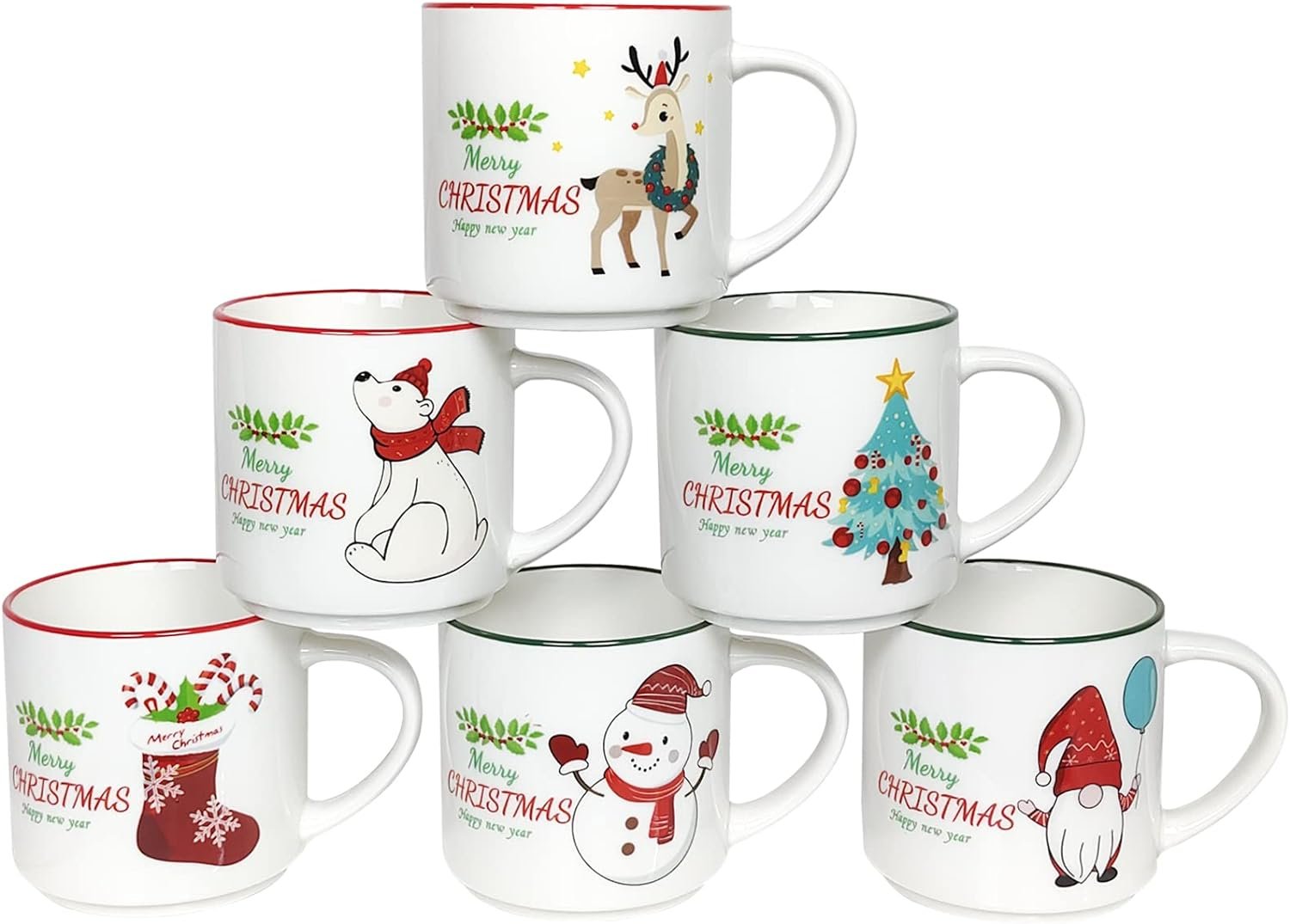
For example, a café or retail program needs a durable body and a size that matches the drink menu. A seasonal collection needs packaging that sells the occasion and a production window that lands before the season. A market-specific program may need different compliance documents, labels and packaging per country.
| Step | Decision | Why it matters | Common mistake |
|---|---|---|---|
| 1 | Use case | Sets capacity, durability and packaging requirements | Starting from a catalogue photo or target price |
| 2 | Shape & capacity | Changes the drink experience, tooling and carton size | Choosing ounces without checking real fill volume |
| 3 | Material | Changes weight, whiteness, chip resistance and cost | Treating ceramic, stoneware and bone china as interchangeable |
| 4 | Decoration | Sets setup cost, colour limits, durability and sample time | Choosing a process before knowing the artwork |
| 5 | Quantity & price | Unlocks tier pricing and mixed-design options | Comparing FOB prices without packaging or freight |
| 6 | Lead time & compliance | Determines order-by date and market access | Approving artwork after the production window has closed |
2. Choose shape and capacity
At a glance: capacity is measured by usable fill volume, not the number printed on the outside; confirm the fill line with a sample before locking a size.
The industry default is an 11oz/330ml mug with a classic handle. It fits drip coffee, tea and hot chocolate, sits comfortably in most hands and is the most economical body to produce. A 15oz mug is better for café service and large coffee drinks; 8oz is an espresso or tea service size; 20oz+ suits commuters, gifting and long-drink concepts.
Shape matters for more than looks. A tapered or cone body changes the printable area and the box dimensions. A straight cylinder gives the most wrap space for a full-colour design. A stackable body reduces warehouse and shipping costs but limits decoration placement. A mug with a lid changes the packaging and drop-test requirements.
Ask for a fill test: fill the sample to 1cm below the rim and measure the usable volume in millilitres. Then decide whether your customer will serve a 300ml latte or a 450ml coffee. If you sell online, photograph the mug next to a hand or a standard cup so the size is obvious.
| Body | Typical capacity | Best for | Decoration notes |
|---|---|---|---|
| Classic handle mug | 11oz / 330ml | Coffee, tea, merchandise, retail | Default option; generous wrap area |
| Café / latte cup | 12–16oz / 350–470ml | Café service, latte and cappuccino | Wide bowl; wrap artwork may distort at curve |
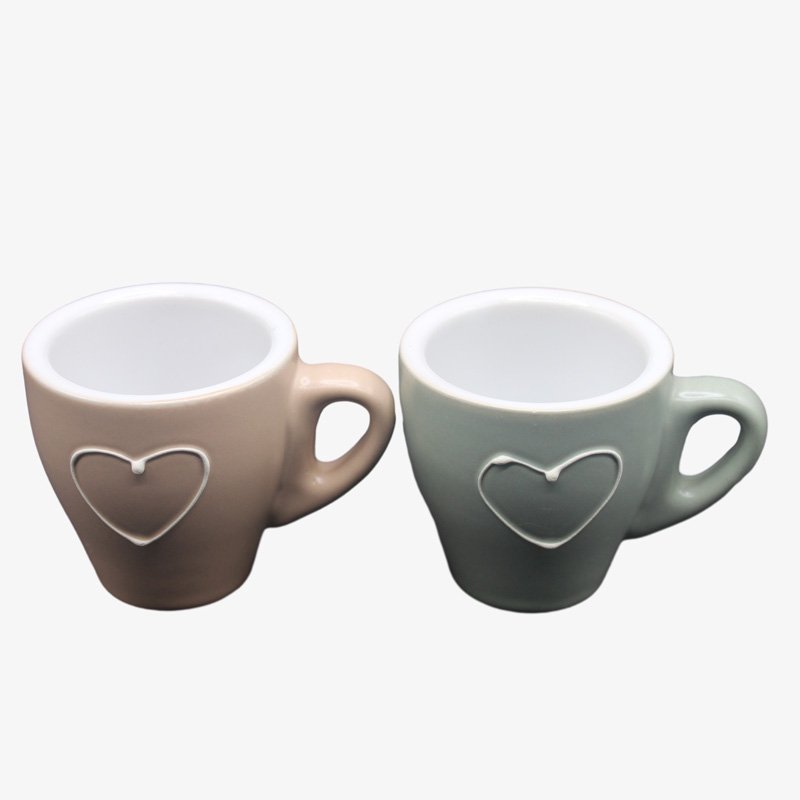
| Espresso cup | 3–6oz / 90–180ml | Espresso, tea service, gift sets | Small print area; saucer often paired |
| Milk mug | 6–8oz / 180–240ml | Breakfast sets, hotel service | Compact body; handle and rim shape matter |
| Stackable mug | 8–12oz / 240–350ml | Wholesale, retail, space-saving programs | Decoration limited by stacking contact points |
| Commuter / lid mug | 12–18oz / 350–530ml | Travel, office, gifting | Lid fit, leak test and packaging add complexity |

3. Choose the material
At a glance: material is not a marketing label; it changes weight, whiteness, edge strength, cost and how the decoration behaves in the dishwasher and microwave.
Ceramic is the general-purpose choice for custom mugs. It fires at a lower temperature than porcelain, offers a broad glaze palette and absorbs impact reasonably well, which makes it suitable for cafés, promotional programs and retail. Stoneware is denser and heavier, with a more rustic feel; it is popular for gift and homeware collections. Bone china contains bone ash, giving it a lighter body and a warmer visual tone; it is a premium gifting material and needs careful packaging. Porcelain is fired at a higher temperature, is dense and white, and can be made thinner than many other bodies.
Do not assume a supplier can switch materials without checking tooling, shrinkage, glaze compatibility and packaging. A 15% price difference between ceramic and porcelain may look small per unit, but a thinner wall can change breakage rates in transit. If your market expects “porcelain”, confirm the composition and firing standard rather than accepting a generic product title.
| Material | Feel and weight | Best for | Cost position | Watch-outs |
|---|---|---|---|---|
| Ceramic | Familiar, medium weight | Café, retail, promotional, everyday use | Entry to mid | Glaze and firing quality vary by supplier |
| Stoneware | Heavier, rustic, textured | Gift, homeware, premium retail | Mid | Heavier cartons and higher freight |
| Bone china | Light, warm white, refined | Premium gifting, wedding, corporate | High | More fragile; packaging costs rise |
| Porcelain | Dense, bright white, thin walls | Premium retail, café, tea | Mid to high | Shrinkage and decoration control are critical |
4. Choose the decoration process
At a glance: decoration should follow the artwork and the intended care instructions — not the other way around.
The most common decoration methods for ceramic mugs are decals, sublimation, screen printing, relief/embossing and gold-rim detailing. A decal is printed on a transfer film, applied to the mug and fired into the glaze; it handles complex artwork and strong colour coverage and is the workhorse for B2B mugs. Sublimation uses a polymer-coated surface and heat to transfer dye; it is excellent for photographs and full-colour artwork but is generally not suitable for heavy dishwasher cycles on an uncoated ceramic body. Screen printing applies one colour at a time and is efficient for simple, bold spot-colour designs.
Relief or embossed decoration adds a tactile dimension and works well for premium gifts, but the mould or tooling and the packaging must be planned early. Gold rims and metallic finishes signal gifting and premium retail, but they come with care requirements — usually hand wash and no microwave — and must be labelled clearly. If your customer expects “dishwasher safe”, confirm the exact decoration and firing combination in writing.
| Process | Best for | Colour / photo | Durability notes | Setup and cost |
|---|---|---|---|---|
| Decal | Complex artwork, brand patterns, retail | Full colour, strong coverage | Fired into glaze; good durability | Decal and firing setup; best for 500+ pcs |
| Sublimation | Photos, gradients, small-batch personalisation | Excellent photo reproduction | Depends on coating and care; check dishwasher claim | Digital setup; cost-effective for short runs |
| Screen print | Simple logos, spot colours, promotional | 1–4 colours; crisp edges | Good with correct glaze and firing | Screen setup per colour; volume price falls |
| Relief / embossed | Premium tactile gifts, brand texture | Limited colour; tactile | Durable if body is fired correctly | Tooling and sample approval; higher MOQ |
| Gold rim / metallic | Wedding, gifting, premium retail | Metal accents; limited colour | Hand wash; not microwave-safe | Additional process and stricter QC |

5. Set quantity and price
At a glance: unit price is a function of body, decoration, packaging, order quantity and delivery terms — not a single “mug price”.
MugFactory publishes indicative tier pricing from our Liling lines. The table below is for a standard 11oz ceramic body with one decoration and standard packaging, FOB Liling; it is a starting point for budget planning, not a landed-cost quote. Your final price depends on the body, the number of print colours, the packaging and the shipping terms.
| Order quantity | Indicative unit price | What is normally included | What changes the price |
|---|---|---|---|
| 500 pcs | from $2.50 | Standard body, one decoration, standard packaging | Size, decoration coverage, gift box, testing |
| 3,000 pcs | from $2.20 | Same specification, volume setup amortised | Multiple designs, mixed bodies, inserts |
| 10,000 pcs | from $2.00 | Same specification, planned production run | Custom mould, premium finish, split shipments |
Two quotations can both say “$2.35 per mug” and still be very different. Check whether the price is EXW or FOB, whether inner trays and gift boxes are included, how many print colours are covered, whether samples are credited, and what happens if you split one order across three designs. The lowest unit price is often the one with the most exclusions.
A standard order can combine designs to reach a volume tier; a custom body or new mould is quoted separately. Read our 2026 pricing guide for the full cost breakdown and our MOQ guide for mixed-design rules.
6. Lock the calendar and compliance
At a glance: production takes 30–45 days after sample approval, and sea freight to the US or EU adds roughly 30 days; the order-by date is earlier than most buyers expect.
Sampling is the schedule risk most buyers underestimate. A digital mockup can be produced quickly, but a physical sample has to be made, decorated, fired, checked and shipped. Approve the sample before booking production capacity, then add production and freight. For a December retail launch, the practical order-by date for a standard program is mid-August; for a November program, late August. Our holiday production calendar works backwards from each on-shelf date.
Compliance should be defined in the brief, not discovered at the port. For food-contact markets, buyers commonly ask for FDA or LFGB test reports; retail onboarding may also require BSCI, Sedex, FSC or ISO 22000 documentation. Requirements differ by country and product, so confirm the applicable standard with your compliance team. MugFactory can supply test reports and audit documents for review; this guide is not legal advice.
7. Seven mistakes that create rework
- Starting with a price target before the use case. A $2 mug and a $4 mug are different bodies, not the same mug at different markups.
- Choosing ounces without a fill test. A “15oz” body may hold less than expected once the fill line is set.
- Treating decoration as a late add-on. The decoration method determines the sample, the firing cycle and the care label.
- Comparing FOB quotes as landed cost. Freight, duty, insurance and delivery can change the ranking of suppliers.
- Ignoring packaging at the sample stage. A gift box can add cost, cube and breakage risk that the mug quote does not show.
- Approving artwork after capacity is booked. Artwork changes after sample approval are the most common cause of missed launch dates.
- Assuming every “custom mug” is food-contact ready. Confirm glaze, decoration and test documentation for the destination market.
8. How MugFactory de-risks the program
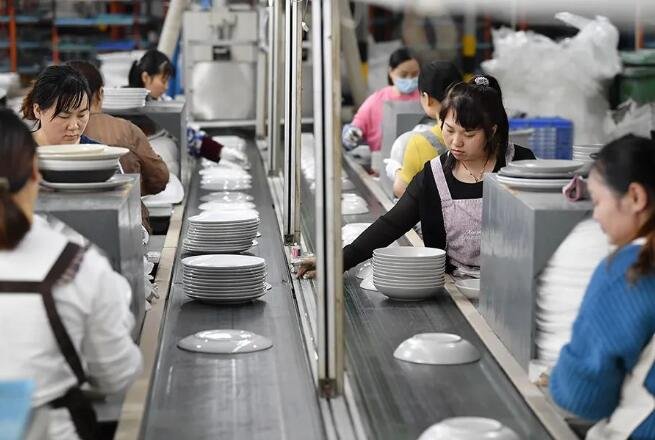
MugFactory runs custom ceramic, bone china and stoneware mugs on an exclusive Liling production network with in-house design, packaging, QA and export documentation. The practical difference is that the specification, sample, production and documentation sit with one team rather than being handed between a trading company and several factories.
- A defined decision order at brief stage — use, shape, material, decoration, quantity and market — before a price is locked.
- A digital mockup to test artwork placement before a physical sample is made, with physical samples approved before production.
- Batch traceability, in-process checks and a photo QC report before shipment, so the buyer sees the batch before it leaves Liling.
- Export documents, test reports and audit pack support for retail and distributor onboarding.
- A production window of 30–45 days after sample approval, planned against the holiday calendar rather than a generic lead time.
A one-page brief that prevents rework
At a glance: a complete brief fits on one page and gives the factory enough information to quote the same product you have in mind.
Most quote cycles stall because the buyer and supplier are imagining different products. A one-page brief removes that ambiguity. Fill it in before you ask for pricing, and ask every supplier to quote against it.
| Field | What to write |
|---|---|
| Use case | Who receives the mug, where it is used and how it is sold |
| Body / capacity | Shape, usable fill volume and lid or saucer |
| Material / glaze | Ceramic, stoneware, bone china or porcelain; gloss or matte |
| Decoration | Artwork, number of colours, coverage, finish and care requirements |
| Packaging | Inner tray, gift box, sleeve, labels and carton marking |
| Quantity | Total pieces, number of designs and expected annual repeat |
| Destination | Country, port or door address, Incoterms and compliance needs |
| On-shelf date | The date the goods must be available, not the date you want to order |
With those eight fields, a supplier can quote the same product you are comparing. Without them, the cheapest quote is often the one with the most assumptions — and the assumptions surface after the order is placed.
Packaging and the delivered cost
At a glance: packaging is part of the product and part of the freight bill; a gift box that looks good in a mockup can double the carton volume.
A retail-ready mug program usually needs an inner tray, a retail carton or gift box, a shipping carton and possibly a label or insert. Each layer adds cost and cube. On a 500-piece order, the fixed cost of a custom box is spread over fewer units, so the packaging percentage can be higher than on a 10,000-piece run.
Ask for the packed carton dimensions and gross weight before you approve the packaging. If the box is oversized, you pay for air in the container and for damage when the mugs move inside it. A drop-tested standard carton can be a better commercial decision than a rigid gift box for a wholesale program.
| Layer | What it protects | What it adds | Buyer decision |
|---|---|---|---|
| Inner tray | Mug-to-mug contact, handle support | Material, tooling, packing time | Standard moulded pulp or custom insert |
| Retail carton / sleeve | Shelf presence and brand story | Print, die-cut, assembly | Print in-line or use a label |
| Gift box | Unboxing and premium positioning | Rigid board, magnet, foam, assembly | Reserve for gifting SKUs |
| Shipping carton | Transit and pallet stacking | Board grade, dimensions, tests | Drop-tested standard carton |
What to check in the physical sample
At a glance: approve the sample against a written checklist, not a feeling; a sample that looks right but fails a drop test or a dishwasher cycle is not approved.
Check the body for straight walls, a level rim and a handle that sits comfortably in the hand. Check the decoration at the correct print area, with the colour close to the approved Pantone reference and no visible registration error. Fill the mug to the intended line and confirm the usable capacity in millilitres.
Then test the conditions the customer will create: a drop test in the packed carton, a dishwasher cycle if the claim allows it, a microwave test if relevant, and a lid or saucer fit check. Finally, compare the sample carton and label to the approved dieline. A sample sign-off that covers these points prevents a production batch that is technically “the same” but commercially wrong.
- Body: straight wall, level rim, handle comfort and capacity.
- Decoration: print position, colour, registration and fired finish.
- Durability: drop test in packaging, dishwasher or microwave claim.
- Packaging: inner tray, carton, label and dieline accuracy.
- Documents: test reports, care label and artwork approval on file.
Planning a custom mug program?
Send us the use case, target quantity and on-shelf date. We will come back with a body recommendation, indicative tier price and a production calendar — usually within one business day.
FAQ
What is the minimum order for custom mugs?
Our standard MOQ is 500 pieces per design for standard bodies. Multiple designs can share a production run, and sample orders can be placed below the production MOQ. Custom bodies or new moulds are quoted separately. See the MOQ guide.
Should I choose ceramic, stoneware or bone china?
Start with the use case. Ceramic is the workhorse for cafés, retail and promotional programs; stoneware adds weight and a rustic feel for gift and homeware; bone china is lighter and more premium for gifting. Confirm the fired body, glaze and packaging, not just the label.
Which decoration is best for a logo?
A decal is usually the best balance for a multi-colour logo at 500+ pieces. Screen printing is efficient for one to three spot colours. Sublimation suits photographs and full-colour artwork but needs a coated body and clear care instructions.
How long does production take?
Plan 30–45 days after sample approval, plus about 30 days for sea freight and buffer. Air and express reduce transit time but increase freight cost. Peak season can add one to two weeks, so book capacity early.
Can I mix designs in one order?
Yes, on the same standard body and colour family. Mixed designs share a run but keep per-design setup and packaging requirements. The exact per-design minimum is confirmed in the quote.
Can you supply FDA or LFGB test reports?
We can provide food-contact test reports and audit documents for your compliance review. The applicable standard depends on the destination market and the product, so confirm requirements with your compliance team before production.
Sources

MugFactory’s sourcing and production team helps brands, retailers and distributors plan custom ceramic mug programs from 500-piece pilots to annual production. Based in Liling, close to the lines, the team covers design, packaging, QA, export documents and after-sales.