Breakage is usually treated as a freight problem to be claimed, not a packaging problem to be designed. Buyers ask for a stronger carton after the first damaged pallet, when the mug drop test packaging decision should have settled the question before production began.
This article is for buyers who have opened a carton of chips and broken handles and want to know how packing is validated. It explains what a drop test measures, which parameters we vary and why, how each packaging layer works, and what to check in the photo QC report. Related writing sits in our Design & Structure column.
Key takeaways
- The carton is engineered, not chosen: a drop test validates one packed configuration, so changing the body, lid or box means testing again.
- Parameters are agreed per program: height, orientation and drop count follow packed weight, channel and destination, so treat any single figure as typical practice.
- Most breakage starts inside the carton: handle-to-body and rim-to-rim contact cause more claims than the outer board grade.
- Every batch is inspected and photographed: final inspection includes a drop test, packing verification and a photo QC report.
- Ask for the packed configuration: carton dimensions and gross weight change freight cost and damage rates.
1. What a drop test is actually measuring
At a glance: a drop test measures whether a packed mug survives a controlled fall in the configuration it will ship in, not whether the mug is strong in the hand.
A mug that survives a fall onto a carpet tells you nothing. A drop test fixes the variables — packed weight, carton construction, inner tray, drop height, orientation and surface — and records what happened. The record is the deliverable: which corner hit first, whether the handle took the load, whether the rim chipped.
It also separates two failure modes. A body that cracks after an edge drop is a structure or packing problem; a handle that snaps because it carried the carton’s mass is a packing problem. The test tells you which one you have before 3,000 pieces are in a container.
2. The parameters we vary, and why none is universal
At a glance: drop height, orientation, drop count and pass criteria are agreed per program; there is no single figure that fits every carton and channel.
Published test methods exist, and they differ by industry, carton weight and destination. In most cases the useful approach is to set the parameters from how the carton will be handled — its packed weight, whether one person or two lift it, whether it ships on a pallet or as a parcel — then test every face that can take an impact. A standard number without the packed weight may not apply to your carton.
| Parameter | Typical practice | What it reveals |
|---|---|---|
| Drop height | Set from packed weight and how the carton is lifted | Whether corner and edge protection survives a real fall |
| Orientation | Flat, edge, corner and end drops in an agreed order | Which face takes the impact first |
| Drop count | Enough to test every vulnerable face and the seam | Whether a second impact reveals a weakness |
| Packed condition | Tested in the retail carton inside the shipping carton | Whether the insert holds the mug clear of the wall |
| Pass criteria | No chip, crack, handle break or lid failure | Whether the design carried the test, not luck |
Treat any single number as typical practice for a given carton, not a standard for yours. Confirm the parameters in writing before the run, and again if the body, lid or gift box changes.
3. Packaging layers and the job each one does
At a glance: each layer has one job, and when a layer is removed to save cost another layer has to take the load.
A typical packed mug uses a moulded or folded inner tray that holds the body away from the carton wall, a wrap or sleeve, a retail carton or gift box, a shipping carton with a board grade matched to the stacking load, and pallet protection for bulk. Gift sets and lidded mugs add parts that move, so the packing for mug gift sets and lid mugs is validated as its own configuration.
| Layer | What it protects | What it adds | Buyer decision |
|---|---|---|---|
| Inner tray | Mug-to-mug contact and handle support | Moulded pulp tooling and packing time | Standard moulded tray or custom insert |
| Wrap or sleeve | Surface, print and rim protection | Material and one packing step | Needed for gift and retail SKUs |
| Retail carton or gift box | Shelf presence and unboxing | Print, die-cutting, assembly | Print in line or apply a label |
| Shipping carton | Transit and pallet stacking | Board grade, dimensions, drop test | Tested standard carton or custom size |

Packaging is also a cost line. A rigid gift box can double carton volume and freight, which is why our 2026 pricing guide treats packaging separately from the mug.
4. The five most common causes of breakage
At a glance: most claims trace back to contact, movement or crush inside the carton rather than to the freight company.
| Cause | What it looks like on a claim | Fix |
|---|---|---|
| Handle contact | Broken or chipped handle, with a mark on the body beside it | Reposition the tray so the handle sits in a void |
| Rim-to-rim contact | Chips on the rim edge in a stacked layer | Add a rim separator or a taller tray wall |
| Movement in an oversized carton | Scuffs, mixed damage, mug out of position | Match the carton to the packed dimensions |
| Crush under load | Cracks across the base, deformed cartons | Increase board grade or reduce stack height |
| Body change without a new tray | Loose or tight fit after a mould change | Re-test whenever the body or mould changes |
A chip on the rim and a crack across the base look similar on a claim form and have different causes. Chips usually mean rim-to-rim or rim-to-wall contact; a crack across the base usually means the carton was crushed or dropped on a corner; a broken handle usually means the handle was the contact point. Photograph the damage inside the carton first.
5. How a carton gets approved before production
At a glance: the packed sample is tested and signed off before the run, and the approved configuration is the one production must match.
The sequence has to happen in order. The body and decoration are approved as a master sample. The carton and inner tray are made to the approved dieline and the mug is packed as it will ship. The packed carton is dropped in the agreed orientations and inspected for chips, cracks and handle damage. The result is recorded, photographed and attached to the specification.
Two changes restart the test: a new body and a new carton. A body that moves between moulds can shift a few millimetres in diameter or height, which changes how the tray holds it; our note on open mould versus existing mould explains the tooling and timing.
6. Reading the photo QC report before you release the shipment
At a glance: the report should show the batch, the packing and the carton condition, not just a row of mugs on a table.
Final inspection covers dimensions and appearance, handle strength, a drop test in the packed carton, food-contact test reports where required, packing verification and a photo QC report. The photos matter because they show the carton as it was closed: the tray seating, the label, the batch record and the outer box.
Read the report against your approved configuration. If the tray in the photo is not the tray you approved, the carton has not been tested in the configuration it ships in. Request the batch traceability record with the photos.
7. How MugFactory de-risks packing and transit
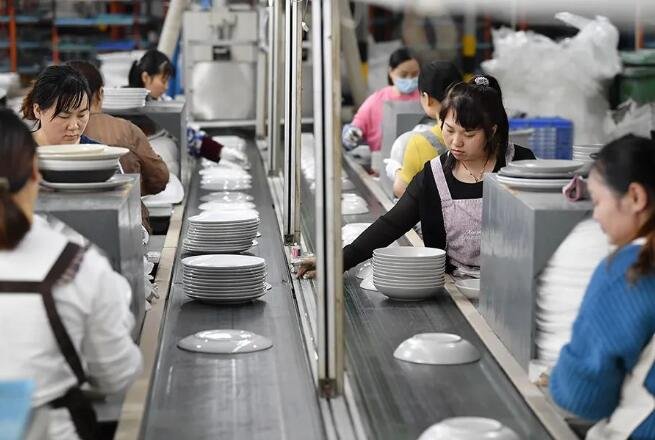
MugFactory runs ceramic, bone china and stoneware mugs on exclusive Liling lines, with 20 years of export experience across more than 40 countries. Packing and inspection sit with the same in-house QA and export teams that approve the sample, so the carton tested is the carton produced. The inspection equipment is listed on our factory page.
- Three-stage inspection: pre-production master-sample approval, in-production checks on glazing, printing and kiln records, and final inspection with a drop test and packing verification.
- Colour checked for ΔE against the approved sample, with print position checked against the dieline.
- Batch traceability records and a photo QC report on every batch before shipment.
- Lid and commuter bodies get seal checks, with dishwasher and microwave tests where the care claim requires them.
- Export documents and test reports available on request, with Incoterms agreed at quotation.
Send the packed specification with your enquiry through Request a Quote, and the reply can cover the carton and the test record rather than the mug alone.
See the line your order will run on
Breakage is decided by the carton, the tray and the test, long before a container is loaded. Visit the Liling lines, or ask for the packed specification and photo QC record from a comparable program.
FAQ
What is a drop test and why does it matter?
It is a controlled fall of the packed carton, inspected afterwards for chips, cracks and handle damage. Most transit breakage is caused by movement or contact inside the carton, not the outer board alone. A tested carton shows whether the approved packing protects the mug as it will ship.
From what height should a carton be tested?
There is no universal figure. Height is agreed from the packed weight, how the carton is lifted and the channel it ships through, and it is recorded with the test. Any number you see quoted is typical practice for a particular carton, not a standard for yours.
How many drops make a pass?
Enough to test every vulnerable face, edge and corner in the agreed orientations, with the mug inspected after each drop. The pass criteria are no chip, crack, handle break or lid failure. The count is part of the program specification, so it is agreed and recorded.
What usually causes breakage?
Contact and movement inside the carton, followed by crush: handles touching bodies, rims touching rims, a tray that no longer fits, or a carton too large for the insert. The outer board grade matters, but a thicker box rarely fixes a packing problem that starts inside.
Can we see the drop-test results?
Yes. Final inspection includes a drop test in the packed carton, packing verification and a photo QC report, with the record tied to the batch. Ask for the photos of the packed configuration with the batch traceability record, and compare them with the specification you approved.
Sources

MugFactory’s sourcing and production team helps brands, retailers and distributors plan custom ceramic mug programs from 500-piece pilots to annual production. Based in Liling, close to the lines, the team covers design, packaging, QA, export documents and after-sales.