

Most museum shops buy souvenir mugs the way they buy a poster: one design, one print run, then reorder when it sells out. That approach produces a bestseller nobody can repeat. Souvenir mugs for museums are a retail program, not a print job: the design has to fit a season, the artwork has to clear rights before it reaches a printer, and the second order has to match the first. Institutions that treat the mug as a one-off end up with three slightly different reds on one shelf.
This guide is for museum, gallery, heritage site, national park and attraction retail buyers, and for the interpretation and licensing teams who approve artwork. It sets out how to structure an annual series, how to clear rights before a dieline is drawn and how to plan reorders around a visitor season. The licensing section is general information, not legal advice.
Key takeaways
- Plan 3–5 designs a year: one core mug, two seasonal and one limited edition give a shop a reason to reorder.
- Clear rights first: photography, artworks, maps, typefaces and institutional marks each need a decision before artwork starts.
- 500 pieces per design is the standard MOQ; a series can share a body and a run, and samples sit below MOQ.
- 30–45 days of production and about 30 days of sea freight mean a summer series is ordered in winter.
- Reorders match when the approved sample, ΔE reference and dieline version stay on file.
1. Start from the visitor calendar
At a glance: a museum mug program is planned around visitor peaks, so design, quantity and reorder point follow the season rather than the factory calendar.
A park shop may earn most of its mug revenue in a few months, while a city museum spreads visitors across the year and spikes at a blockbuster exhibition. Build the series to that shape: a core design that sells all year, seasonal designs timed to the peaks and one limited edition for an opening. Travel souvenir mugs work when the artwork carries the place across the full wrap rather than a small badge.
2. Give the annual series a structure
At a glance: an annual series works when every design has a job — a core line, two or three seasonal designs and one limited edition — so the shop knows what to reorder and what to retire.
Four tiers are enough for most shops. More designs split the same visitor spend and multiply artwork and setup costs; fewer leave the shelf static. Keep the core body, glaze and dieline stable and change only the seasonal artwork.
| Tier | Role in the shop | Designs a year | Reorder rule |
|---|---|---|---|
| Core | Everyday bestseller, always on shelf | 1–2 | Reprint while body and dieline stay unchanged |
| Seasonal | Follows a season or an exhibition | 2–3 | Decide carry-over before the next brief |
| Limited | Openings, anniversaries, donor events | 1 | Fixed quantity, no reprint |
| Gift boxed | Higher price point for gifting | 1 | Box reordered separately |
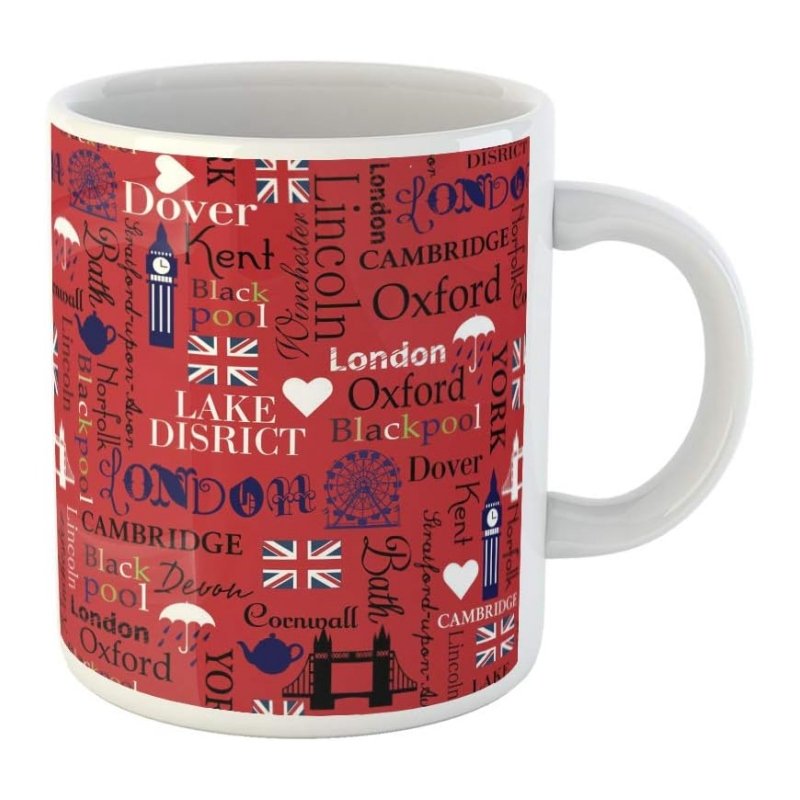
Destinations with a strong regional identity can extend the core line by place rather than by season; the same structure applies across our destination-themed mug ranges for national markets.
3. Clear rights before the artwork is drawn
At a glance: every element on a museum mug belongs to someone — the object photograph, the painting, the map, the typeface, the institutional mark — and each needs written clearance before a dieline exists.
Rights problems rarely come from the obvious image. They come from the photograph of a public-domain painting, the trail map redrawn from a survey, a typeface licensed for print but not merchandise, or an institutional mark used on a product the institution does not own.
| Asset | Who usually controls it | What to obtain |
|---|---|---|
| Object photography | Museum studio or freelance photographer | Licence for merchandise, with credit line |
| Artwork in the collection | Artist, estate or rights society | Reproduction licence for commercial products |
| Maps and trail diagrams | Park service, survey or cartographer | Permission to reproduce and adapt |
| Institution name and marks | Brand or trademark office | Written approval of reproduction and placement |
| Typefaces | Type foundry | Merchandise licence, not a desktop licence |
| Sponsor or partner marks | The sponsor | Approval with a term limit |
This section is general information, not legal advice. Rights vary by country, by the terms of a loan or bequest and by whether the institution holds copyright or only a licence, so confirm each item with your rights or legal team and file the approvals with the artwork.
- Confirm the credit line and its exact wording.
- Record the territory and term of each licence.
- Check whether the image may be cropped for a full wrap.
- Name who signs off the final proof.
- Store each approval with the artwork file.
4. Choose a body that survives shop life
At a glance: retail mugs are stacked, handled and washed, so pick a body that stacks and a decoration fired into the glaze rather than sitting on top of it.
Decal decoration is printed on a transfer film, applied to the mug and fired into the glaze, which is why it survives a dishwasher when the care instructions allow it. Sublimation needs a polymer-coated body and suits photographic artwork. Screen printing charges by colour and suits bold graphics, while relief needs a mould and belongs to limited designs.
Gold rim detail lifts a gift set but cannot go in a microwave, so it does not suit a mug bought by visitors who reheat coffee. Decide the care claim before the sample is made, then test the sample against it. For shelves that need a stable, stackable body and a retail-ready carton, the retail and supermarket mug range is a closer starting point than a gift-led shape.
Packaging has to be shelf-ready: a printed sleeve or box with the object label, a barcode panel and a carton that stacks without crushing. Keep one dieline version for reorders, or the second run will not fit the first. If the box carries a recycled or compostable claim, keep the wording specific and evidenced. More on shelf-ready presentation sits in our branding and presentation section.
5. Price for the shop’s margin
At a glance: a retail mug carries factory, wholesale and shop margins, so body, print colours and packaging matter more than the design fee.
Work back from the price your shelf supports. Published tiers for standard 11 oz / 330 ml ceramic mugs start at $2.50 at 500 pieces, $2.20 at 3,000 and $2.00 at 10,000, FOB Liling, including one printing position and standard export packaging; freight, duty and inland delivery are quoted separately.
A series usually beats a single design on cost because one body, one carton and one print setup are amortised across the year. A boxed option at a higher price point suits sponsors and donors: the concepts in our corporate mug gift set guide translate to institutional gifting, and the mug gift set range covers the formats.
Send the series plan, the shop’s price points and the season dates through the quote form, and ask for body, decoration, packaging and freight as separate lines.
6. Plan seasonality and reorders
At a glance: production takes 30–45 days after sample approval and sea freight about 30 days, so the order-by date for a summer series falls in winter.
Capacity from August to November fills first, which collides with the season most attractions need stock for. Build the calendar backwards from the shelf date and treat the sample as a milestone with its own 7–10 days.
| Program type | Peak window | Weeks before peak | Reorder trigger |
|---|---|---|---|
| Park summer season | May–September | 12–14 | Stock cover below lead time |
| Winter holiday | November–December | 14–16 | Sell-through ahead of plan |
| Exhibition opening | Opening date | 16 | Fixed quantity, no reorder |
| Online evergreen | All year | Rolling | Reorder at the same tier |
The wider production calendar, including the August to November peak, is set out in our holiday mug production calendar, which is the quickest way to test whether a launch date is realistic.
Two rules keep a series reorderable: never change the body or dieline mid-series, and keep the approved master sample, the ΔE reference and the glaze lot note with the artwork. Batch traceability records and a photo QC report at dispatch make the second run comparable.
7. How MugFactory de-risks a souvenir series
MugFactory is a vertical full-stack custom mug company working only in ceramic, bone china and stoneware, on exclusive Liling lines since 1994, with design, packaging, QA, export documents and after-sales in one in-house team. Six production bases, ten branch factories and twenty kilns sit behind the network.
- A master sample signed off before production, with colour measured on a ΔE meter against the approved reference.
- Batch traceability records and a photo QC report at dispatch, so a reorder matches the first run.
- Drop tests on the packed carton, plus dishwasher and microwave testing where the care claim requires it.
- FDA and LFGB food-contact test reports for the destination market, available on request.
- FSC-certified board for retail boxes, with BSCI, Sedex, Higg FEM and ISO 22000 documents for institutional onboarding.
Test the body and the finish first
Send the series plan, the shop’s price points and the season dates. We will propose a body, an indicative tier price and a sampling schedule that clears your shelf date.
FAQ
What is the minimum order per design?
Standard bodies start at 500 pieces per design. A series can share one body and one production run, and sample orders can sit below the production minimum. Custom shapes, bone china and heavily decorated programs can require more, so confirm the per-design minimum in the quote before the range is fixed.
What IP or licensing approvals do we need?
Identify every asset on the artwork and its owner: object photography, collection works, maps, typefaces and the institution’s own marks. Obtain written permission that covers merchandise, territory and term, and some institutions require approval of the final reproduction. This is general information, not legal advice; confirm the position with your rights team.
How many designs should one year carry?
Most shops do well with three to five: one or two core designs that carry the volume, two seasonal designs tied to exhibitions or park seasons, and one limited edition for an opening or anniversary. More designs split the same visitor spend and multiply artwork and setup costs.
What packaging works for museum retail?
A shelf-ready printed sleeve or box with an object label, a barcode panel and a carton that stacks without crushing. An inner tray protects the body, and one dieline version should be kept for every reorder. FSC-certified board can be specified where the buyer’s policy requires it.
How do we keep a series consistent across reorders?
Keep the approved master sample, the ΔE colour reference, the glaze lot note and the dieline version with the artwork file. Batch traceability records and a photo QC report at dispatch let the second run be compared with the first, and reordering the same body at the same tier avoids a silent change of shape.
Sources

MugFactory’s sourcing and production team helps brands, retailers and distributors plan custom ceramic mug programs from 500-piece pilots to annual production. Based in Liling, close to the lines, the team covers design, packaging, QA, export documents and after-sales.


