

Most taproom merchandise plans start with the glass: the branded pint, the sampler paddle, the one-litre stein behind the bar. That is the wrong first decision for brewery mugs wholesale, and it is why so many branded mugs end up as a logo on a body that cannot take the dishwasher, the retail box or the photograph.
This guide is for breweries, taprooms and craft drinks brands building a ceramic program, from a 500-piece pilot to an annual drop calendar. It shows how to pick a body for service, price the mug and the box together, and work a release date backwards. It is also clear about what we do not make.
Key takeaways
- Two jobs, one mug: serviceware in the taproom and merchandise on the shelf, and the body has to survive the harder one.
- Steins are a different form factor: separate moulds, lids and fittings; MugFactory focuses on ceramic mugs.
- MOQ is 500 pieces per design: mixed designs can share a run, so a four-beer series sits in one order.
- Indicative tiers: $2.50 at 500 pieces, $2.20 at 3,000 and $2.00 at 10,000 for a standard 11 oz body, FOB Liling.
- Three months out: production runs 30–45 days after sample approval and sea freight adds about 30 days.
1. Four jobs a brewery mug does
At a glance: taproom service, merch, membership and gifting need different bodies and packaging; one SKU rarely covers all four.
Breweries often brief one mug and use it everywhere: behind the bar, in the webshop, in the members’ box, at the festival stand. That works only when the body is chosen for the hardest job, which is usually service. If the artwork is one logo mark rather than a full wrap, logo mugs covers the standard positions.
| Use case | Typical quantity | Body and capacity | Decoration |
|---|---|---|---|
| Taproom service | 500–1,000 | 11 oz / 330 ml ceramic, thick handle | One or two print colours, fired decoration |
| Merch and retail | 1,000–3,000 | 11 oz / 330 ml or 15 oz / 450 ml stackable | Full-wrap decal, printed sleeve |
| Membership tier | 500–2,000 | 15 oz / 450 ml stoneware | Relief or laser-engraved number |
| Gifting | 500–1,000 | 11 oz / 330 ml with coaster or tin | Gold rim, rigid gift box |
| Festival and seasonal | 500–3,000 | 11 oz / 330 ml standard body | Two-colour artwork, dated back stamp |
The quantity column is a planning band, not a rule: your covers and sell-through decide it. Match the packaging to the channel the mug is sold through.
2. Steins, tankards and mugs are not interchangeable
At a glance: a stein is a heavy, often lidded vessel with its own mould and fittings; a mug is an open handled cup, so tooling, packaging and care instructions differ.
Brewery buyers say “mugs” and mean three objects. A stein or tankard is typically a heavy stoneware or glass body, often around a litre, frequently with a pewter or ceramic lid and a dimpled wall. A mug is an open, handled cup of 8–20 oz / 240–600 ml. A tumbler has no handle.
MugFactory produces ceramic, bone china and stoneware mugs on our Liling lines, and that is the only form factor we quote. A lidded litre vessel needs a specialist mould, a metal-fitting supplier and different drop-test criteria, so we would rather say that at brief stage.
What carries over is the ceramic know-how: glaze chemistry, decals fired into the glaze, colour control against a Pantone reference, export packaging. What does not carry over is the volume, the lid and the handle geometry.
3. Choose the body and care claim for service
At a glance: for taproom service, choose a straight-wall 11 oz / 330 ml body and a decoration fired into the glaze, then state the care claim on the box.
Service is the hardest test: commercial dishwasher cycles, hot water, detergent and a busy bar. A decal applied to the mug and fired into the glaze at roughly 750–850°C is the usual choice for complex artwork and heavy colour coverage. Screen printing suits one to three spot colours, and laser engraving gives a permanent tonal mark.
Care claims follow the decoration. Gold rims and metallic finishes are typically hand wash only and not microwave safe. Sublimation needs a polymer-coated body if dishwasher performance matters. Our hotel and restaurant mugs are built around that service cycle.
Weight is the other decision. A 15 oz / 450 ml stoneware body feels substantial and suits a dark beer; an 11 oz / 330 ml ceramic body costs less, packs tighter and stacks better on a shelf. Test both with bar staff before committing a run.
4. Price the mug and the box together
At a glance: the mug price is half the number; the retail box, the print colours and the delivery term decide the landed cost.
The table uses indicative tier pricing for brewery mugs wholesale on a standard 11 oz ceramic body with one-position printing and standard export packaging, FOB Liling. Freight, duty, new moulds and lab testing sit outside it.
| Program size | Indicative unit price | Packaging approach | What moves the number |
|---|---|---|---|
| 500 pcs | from $2.50 | Inner tray and export carton; printed sleeve optional | Gift box, a second print colour, rush timing |
| 3,000 pcs | from $2.20 | Printed sleeve or retail carton; mixed designs on one run | Number of designs and colours |
| 10,000 pcs | from $2.00 | Retail carton with barcode and a pallet plan | Custom mould, premium finish, split shipments |
Sea freight from China to the US or Europe is about 30 days and varies by port and season. Ceramic tableware carries duty under heading 6912 in both the US and EU schedules, so ask your broker for the rate. For a webshop, a private label approach beats a generic promo mug, and our private label mugs page covers the artwork and carton side.
5. Build the drop calendar backwards
At a glance: a drop date is set by samples, production and sailing time, so a festival in early summer is briefed in the previous winter.
Brewery marketing runs on dates: a spring release, a summer series, an autumn festival, a holiday box. Each needs goods in hand before the date, so the calendar is built from the dock backwards: about 30 days of sea freight, 30–45 days of production and 7–10 days for the sample.
| Drop | Brief by | Sample approved | Production and sailing |
|---|---|---|---|
| Spring release (March) | Early October | Early November | November–December production, January sailing |
| Summer patio (June) | Early January | Early February | February–March production, April sailing |
| Autumn festival (September) | Early April | Early May | May–June production, July sailing |
| Holiday gifting (November) | Early July | Early August | August–September production, October sailing |
Two caveats. Capacity fills first between August and November, so a holiday program needs capacity booked rather than hoped for. And the date that matters is when goods reach your warehouse, not when the campaign launches. If a date is immovable, air freight compresses sailing time but not production.
6. Packaging, photography and the online shelf
At a glance: a brewery mug is sold twice, in the taproom and in a photograph, so packaging and imagery must work for both.
Retail packaging usually means an inner tray, a printed sleeve or carton and a barcode that works on a shelf and in a webshop. Paper board certified by the Forest Stewardship Council is a common onboarding request, and recycled or compostable claims need third-party proof.
For gifting, a two-piece set with a coaster or a tin sells higher than a single mug and spreads the packaging cost. Our mug gift sets page shows the usual combinations.
The photograph is part of the specification now: a straight-on shot, a scale reference, a handle-side view, one in-use image and a detail of the rim. Our notes on mug photography for Amazon listings set out what marketplaces check, and more on branded ranges sits in the branding and presentation section.
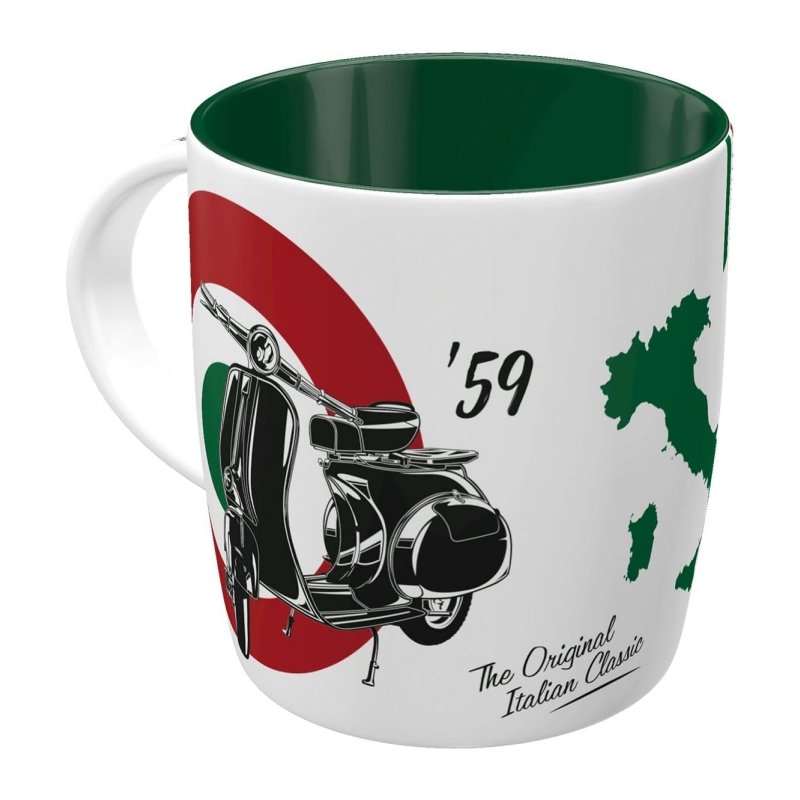
7. How MugFactory de-risks a brewery program
MugFactory’s Liling site has been exporting since 1994, and it now draws on six production bases, ten branch factories and twenty kilns. MugFactory is a vertical full-stack custom mug company making ceramic, bone china and stoneware on exclusive Liling lines, with one in-house team covering design, packaging, QA, export documents and after-sales.
- At brief stage we answer the form-factor question directly: if a stein or a lidded tankard is the right shape, we say so before any artwork begins.
- The floor for a standard body is 500 pieces per design; different designs can share one run, and sampling is allowed below that production minimum.
- A complete brief brings a free digital mockup within one hour; physical samples take 7–10 days and the fee is credited against the order.
- Quality is checked at three points, taking in colour difference, print position and kiln records, and the run closes with a drop test and a photographic QC report.
- Allow 30–45 days for production once approval is given; food-contact test reports and audit certificates are supplied on request.
Planning a custom mug program?
Tell us the pour, the drop date and whether the mug is for service or for sale. We will come back with a body recommendation, tier pricing and a calendar that lands before the festival.
FAQ
What mug works best in a taproom?
A straight-wall 11 oz / 330 ml ceramic body with a comfortable handle is the practical default: it holds a standard serve, packs efficiently and survives commercial washing when the decoration is fired into the glaze. A 15 oz / 450 ml stoneware body suits darker, hotter serves.
What is the minimum order?
Standard ceramic bodies start at 500 pieces per design, and different designs can share one production run, so a four-beer series can be ordered together. Sample orders can be placed below the production minimum. Custom shapes and bone china may need a higher minimum, confirmed in your quote.
Can we add member numbers or names?
Yes, within limits. Personalisation is usually done with laser engraving or a digital process on a coated body, and it changes packing and QC because every unit differs. For numbered membership runs, agree the numbering format, position and reject rule before sampling, and expect a slower line.
What packaging works for retail?
An inner tray, a printed sleeve or retail carton and a barcode cover most brewery retail needs; a rigid gift box is worth it only for higher-price gifting. Paper board certified by the Forest Stewardship Council is a common onboarding request. Ask for carton dimensions and gross weight before approving a box.
What lead time do we need before a festival?
Work back about 30 days of sea freight, 30–45 days of production after sample approval and 7–10 days for the sample itself, plus artwork time. That puts a festival brief around three months before the date, and earlier if it falls in the August to November peak.
Sources

MugFactory’s sourcing and production team helps brands, retailers and distributors plan custom ceramic mug programs from 500-piece pilots to annual production. Based in Liling, close to the lines, the team covers design, packaging, QA, export documents and after-sales.


