

The advice given to new mug sellers is usually about design: find a niche, make the artwork distinctive, price for a healthy margin. The sellers who survive their first year on Amazon and Etsy are rarely the ones with the best artwork. They are the ones whose cartons arrive intact, whose listing images show the mug at a believable scale, and whose labels pass a compliance check without a relisting delay. Design earns the click; operations decide whether the order is profitable.
This guide is for brands, small manufacturers and café owners selling ceramic mugs on marketplaces or their own store. It covers the three things that decide whether a listing makes money: breakage in the parcel network, the asset set the listing needs, and the label choices that keep a product page live. Choosing an Amazon ceramic mug supplier sets all three, because packaging and carton testing are factory decisions, not marketplace settings.
Key takeaways
- Breakage is the margin risk: a marketplace parcel is handled far more often than a pallet, so the inner tray and carton do more work than the artwork.
- Listings are asset problems: a Launch Kit supplies 3–5 product images, a spec sheet and print-ready dielines before you write copy.
- Label before you list: barcode, care claim and country of origin have to be right on the first shipment, not the second.
- 500 pcs is enough to start: samples take 7–10 days, production 30–45 days, and sea freight adds about 30 days.
- Cost the whole chain: the FOB unit price is the smallest line between a factory invoice and a fulfilled order.
1. The failure that ends a listing is a broken mug
At a glance: a marketplace parcel is sorted, thrown and re-sorted several times, so the packaging has to survive handling that a pallet never sees.
A retail pallet travels from container to shelf on a forklift. A marketplace parcel travels through sorting centres, vans and doorsteps, and every transfer is a chance for a mug to meet a hard surface. Breakage shows up twice, first as a refund and then as a review, and a review is harder to repair than a carton specification.
| Breakage driver | What happens in transit | Packaging fix | Cost impact |
|---|---|---|---|
| Mug-to-mug contact | Handles knock when the inner tray fits loosely | Moulded pulp tray with handle support | Small unit cost, fewer claims |
| Thin wall or rim | The rim takes the impact of a stacked parcel | Rim protection or a thicker-walled body | Body or board cost |
| Oversized carton | The mug moves inside the box | Carton sized to the packed mug plus board | Lower cube, lower freight |
| Single-wall board | Board crushes under stacking | Double-wall or a tested board grade | Higher board cost, fewer losses |
None of these fixes is expensive on its own. The expensive outcome is discovering the problem after 3,000 units have shipped, which is why a drop test belongs at the sample stage and not at the packing bench.
2. What the marketplace asks for before it asks about design
At a glance: marketplaces check images, packaging and labels in that order, and a missing requirement holds the listing rather than the shipment.
Platform rules change, and the version that applies is the one in Seller Central or the Etsy help centre on the day you list. The structure of the check does not change: images first, then packaging, then labels.
| Requirement | Amazon, FBA or FBM | Etsy | Own store |
|---|---|---|---|
| Main image | Product on white, without props | Product clear on a neutral background | Your call, kept consistent |
| Additional images | Several angles plus a scale cue | Lifestyle and scale cues help | Reuse the marketplace set |
| Packaging | Must survive warehouse handling and labelling | Protective and presentable on arrival | Branded unboxing opportunity |
| Labelling | Channel barcode and required warnings | Care and material details | Care, material and origin |
| Barcode | Seller barcode or channel label as required | Not usually required | Your own SKU system |
Design one asset set and one carton that satisfy the strictest channel, then reuse both. A mug gift set is the hardest case, because the box has to protect two pieces and still sell the occasion from a thumbnail.
3. The cost stack from FOB to a fulfilled order
At a glance: the factory price is one line in a stack that also carries freight, duty, platform fees, storage and returns, and the stack is where a margin disappears.
Indicative tier pricing for standard 11 oz ceramic mugs starts at $2.50 per piece at 500 pcs, $2.20 at 3,000 pcs and $2.00 at 10,000 pcs, FOB Liling, including one-position printing and standard export packaging. Freight, duty, taxes, platform fees and returns sit outside that figure, and most of them scale with cube and weight rather than with unit price.
| Cost line | Basis | What moves it | Where to control it |
|---|---|---|---|
| FOB unit price | Per piece | Quantity, decoration colours, body | Specification and volume |
| Freight | Per cubic metre or kilo | Carton size and packed weight | Packaging dimensions |
| Duty and taxes | Percentage of declared value | Tariff classification and destination | Correct classification, broker |
| Platform fees | Percentage of sale price | Channel and category | Pricing and channel mix |
| Breakage and returns | Per claim | Packaging and parcel handling | Carton test before launch |
Two decisions move most of the stack: carton dimensions and the number of decoration colours. A carton that fits the packed mug reduces freight on every unit, and one fewer print colour reduces the FOB price on every unit. Neither one changes the artwork the customer sees.
4. The asset set a listing needs
At a glance: a listing needs a hero on white, a scale cue, a print close-up, a care panel and a pack shot, and most first listings are missing two of the five.
Photograph the mug next to a hand or a familiar object so the 11 oz / 330 ml size reads at a glance. Add a close-up of the print edge to show that the decoration is fired into the glaze rather than stuck on, and a shot of the base or the care label. Buyers cannot hold the product, so the images carry the weight a hand would.
Our Launch Kit includes 3–5 product images on white and in scene, a spec sheet and print-ready dielines, delivered within 3–5 working days of artwork approval. It matters most for photo-led ranges, where a photo mug has to prove print quality before a buyer will pay a premium for it.
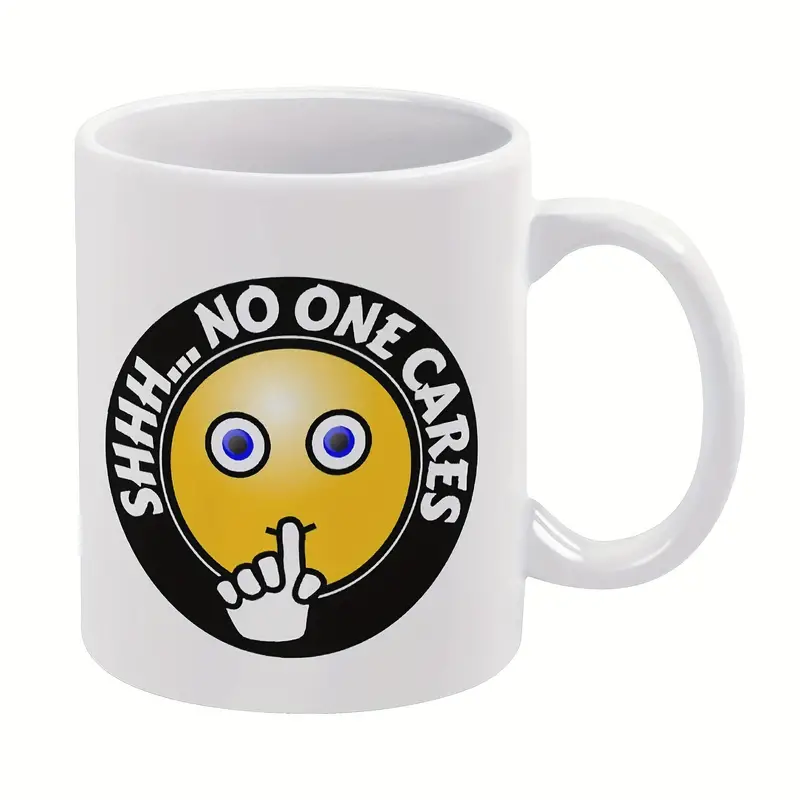
5. Packaging that survives the parcel and still sells
At a glance: the carton has two jobs, arriving intact and looking deliberate when it is opened, and a tested plain carton beats an untested beautiful one.
Start with a moulded pulp or corrugated insert that holds the handle and stops mug-to-mug contact, then size the carton to the packed mug. Drop-test the packed carton before the production run, not after the first claim. If the box is printed, confirm the board grade and whether the paper is FSC certified, because retail and marketplace questionnaires now ask for the certificate rather than the claim.
Our FSC documentation for cartons and inserts is available as a downloadable certificate, and the retail and supermarket range shows the tray-and-carton combinations we build most often.
6. Labels, inserts and claims you can defend
At a glance: the label is where marketplace rules and consumer law meet, and a claim you cannot document is a bigger risk than a missing feature.
A marketplace label usually needs a barcode, a care instruction, the material and the country of origin; confirm the current list in Seller Central before the first print run. Inserts are marketing, but they are also regulated communication, and environmental wording is the usual trap: recycled, compostable and eco-friendly mean specific things, and the FTC Green Guides and the UK Green Claims Code both describe how such claims must be substantiated.
Write the claim you can prove with a document, then keep that document with the product file. Food-contact safety is a separate question from care instructions, and the branding and presentation category covers the packaging side of that file in more detail.
7. Choosing an Amazon ceramic mug supplier
At a glance: the supplier has to hold a decoration standard across repeat orders, because a marketplace review compares batch two with batch one.
Ask for the specification in writing: body, capacity, glaze, decoration method, print area, carton dimensions and packed weight. Ask how colour is controlled between batches and what happens when a repeat order arrives. Ask for a photo QC report before shipment, and for the drop test result on the packed carton. An Amazon ceramic mug supplier who answers those four questions with documents is easier to scale with than one who answers with a price.
The wider buying sequence is set out in the custom mugs master guide, and if you are building a coffee brand rather than a single listing, private label mugs for coffee brands covers the packaging and repeat-order side.
8. A first listing at 500 pieces
At a glance: 500 pieces, one design and one channel is enough to test a listing without tying up cash in stock you cannot sell.
The standard MOQ is 500 pieces per design on standard bodies, and mixed designs can share a production run. Sampling takes 7–10 days after artwork approval and production 30–45 days after sample approval; sea freight adds about 30 days, and peak season fills capacity first. Work backwards from the date you want to be live.
- Fix the body, decoration and carton on one page, then request indicative pricing.
- Approve a physical sample with the carton, insert and label attached.
- Order the asset set and the label artwork against the approved sample.
- Drop-test the packed carton before the production run is released.
- Book the launch date from the production window, not from the order date.
Send the channel, volume and launch date with a quote request, and ask for the packed carton dimensions in the same reply, because they decide the freight line.
How MugFactory de-risks a marketplace launch
For a marketplace seller, the carton, the label artwork and the quality report are settled before the run begins, not after the first claim. The mugs themselves are ceramic, bone china and stoneware, made on MugFactory’s exclusive Liling lines, and one in-house team handles design, packaging, QA and export documentation.
- The master sample is approved with its carton and insert attached, so the drop test reflects the packed unit that actually ships.
- Forming, glazing, printing and firing each get a check, and the batch record carries colour difference and print position.
- Before shipment, final inspection checks dimensions, handle strength and the drop test, then issues a photo QC report.
- Inner trays, retail cartons and export marking are part of the packaging support, with FSC documentation available on request.
- A 500-piece first order runs on the same lines, to the same standard, as an annual program.
Get the assets your launch needs
Tell us the channel, the volume and the launch date. We will send the indicative price, the packed carton dimensions and the asset list your listing needs before you commit to a production run.
FAQ
Can you ship directly to Amazon FBA?
Our export team prepares the documents and carton marking for the destination you nominate, including a marketplace warehouse address. Confirm the current FBA label format and booking process in Seller Central before production, because the platform rules change. We build to the specification you approve, so the label artwork has to be final before the carton print run.
How many product images do we need for a listing?
Start with five: a white-background hero, a scale cue, a print close-up, a care panel and a pack shot. Most listings fail on scale and on print detail. The Launch Kit supplies 3–5 product images on white and in scene, so you can fill the first slots while you commission any extra photography.
Do you provide barcodes, inserts and retail packaging?
We produce the retail cartons, inserts and printed labels, and we size and mark shipping cartons for the channel you sell through. Barcodes are normally supplied by the seller, because the number belongs to your business rather than to the factory. Send the barcode artwork with the label file so it is printed once, correctly.
What MOQ makes sense for a first listing?
500 pieces per design on a standard body is enough to test a listing, and mixed designs can share a production run when the body and colour family match. Sampling takes 7–10 days and production 30–45 days, so a 500-piece test still leaves room to reorder before the season.
How do we reduce breakage claims?
Fix the carton before the artwork. Use an insert that supports the handle, size the carton to the packed mug and drop-test the packed carton before the production run. Then compare claim rates by channel, because a parcel network punishes cartons that a pallet would forgive. Packaging is cheaper to change at the sample stage than after 3,000 units.
Sources

MugFactory’s sourcing and production team helps brands, retailers and distributors plan custom ceramic mug programs from 500-piece pilots to annual production. Based in Liling, close to the lines, the team covers design, packaging, QA, export documents and after-sales.


