

Most promotional mug ideas are judged on the wrong thing: logo size, print area and a catalogue of shapes. The mug that survives the event is rarely the one with the biggest logo. It is the one still in a kitchen cupboard six months later, because it feels balanced when full and fits a routine. An oversized mark is what makes a good body look like an advertisement.
This guide is for marketing and event teams choosing concepts for trade shows, dealer conferences and distributor kits. By the end you can pick a concept by audience and retention rather than unit price, size an order across mixed designs and get the cartons to the venue intact.
Key takeaways
- Retention is a body decision: grip, balance and capacity decide whether a mug is used, not the print area.
- Eight concepts cover most events, from an 11 oz / 330 ml desk mug to a lidded commuter body and a bone china cup.
- 500 pcs is the standard MOQ per design, and mixed designs share a run, so one order serves several audiences.
- Indicative pricing starts at $2.50 a mug at 500 pcs and $2.20 at 3,000, FOB Liling, before freight and duty.
- Order for qualified conversations plus a buffer, not badge scans; a second shipment costs more than surplus stock.
1. Judge the concept in week two, not on the booth
At a glance: the mug that gets kept was chosen for grip, balance and a routine it fits; a large logo is a print cost, not a retention feature.
At a show every visitor takes the mug because it is free and easy to carry. Week two is the filter: does the body hold the drink the person actually makes, does it feel balanced when full, does it survive the dishwasher without ceremony? A heavy 15 oz / 440 ml body that needs two hands goes to the back of the cupboard. A small mark on a body that would sell on its own reads as a maker’s stamp, which is why a single-position print on logo mugs outlasts full-wrap artwork at the same unit cost.
2. Eight promotional mug ideas that earn cupboard space
At a glance: match the concept to who receives it, because the body, the decoration and the packing all change with the audience.
| Concept | Best audience | Cost tier | Decoration |
|---|---|---|---|
| Classic desk mug, 11 oz / 330 ml | Office visitors, B2B stands | Entry | One-position screen print |
| Lidded commuter mug | Sales teams, driver events | Mid | Decal and lid fit test |
| Colour-inside mug | Design-led brands, agencies | Mid | Two-colour decal |
| Stackable mug | Distributor kits, bulk handout | Entry | Single-colour print |
| Café cup and saucer | Coffee and hospitality shows | Mid to high | Full-wrap decal |
| Relief or embossed mug | Premium launches, press kits | High | Mould and colour fill |
| Bone china gift mug | Dealer awards, VIP dinners | High | Decal with gold rim |
| Two-mug gift set | Staff and partner gifting | High | Decal and retail box |
Each of these promotional mug ideas answers a different situation. A distributor kit is opened once and sorted by a rep, so a stackable body that nests in a carton ships cheaper and still gets used. A dealer award dinner is a photograph: bone china with a gold rim does a job a screen-printed stoneware mug cannot. Cost tiers here are relative, not quotes; the range sits under promotional mugs, and a coffee trade fair needs the café concept in our guide to custom mugs for coffee shops.
3. What actually makes people keep a mug
At a glance: five factors decide retention, and only one of them is decoration.
| Factor | Why it decides retention | How to check | Cost impact |
|---|---|---|---|
| Handle and balance | A full mug is heavy; tight handles hurt | Hold a filled sample | Sample time only |
| Capacity match | The wrong size stays unused | Fill test to 1 cm below the rim | None |
| Lid and carry | A lid makes a mug portable | Leak test on a lidded sample | Adds a component and a test |
| Care claim | A mug that cannot be dishwashed stops being used | Confirm decoration and care label | Process choice |
| Mark size | A large mark turns a personal object into advertising | Digital mockup on the actual body | Print area, not unit price |
Handles are the most common failure. A handle works when the fingers pass through with room to spare and the mug hangs level when full, so check a filled sample. Capacity comes second: a 20 oz / 590 ml body suits a commuter habit, while an 8 oz / 240 ml body disappears unless the owner drinks espresso. A lid only helps if it seals, so ask for a leak test, not a photograph; the with lid mugs range covers the bodies we build with one.
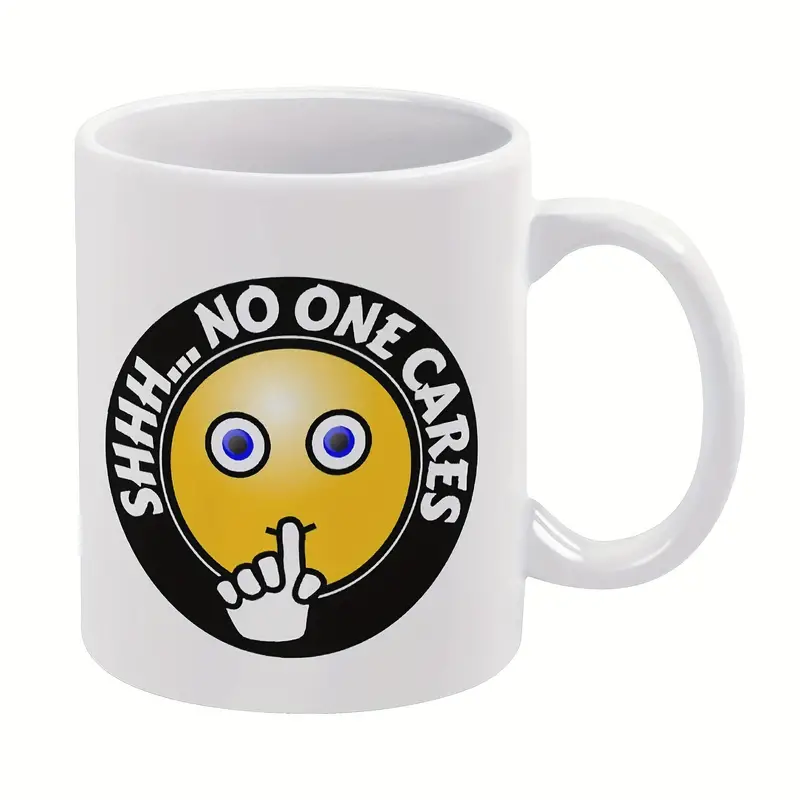
4. Decoration that looks like a product, not a giveaway
At a glance: choose the process from the artwork and the care claim, and let one colour printed well beat four printed badly.
A decal is printed on transfer film, applied to the body and fired into the glaze at around 750–850°C, so it holds gradients and fine type and does not peel. Screen printing lays one colour at a time and gives crisp edges on spot colours, with a setup cost per colour that rewards simple artwork. Sublimation needs a polymer-coated body and transfers at about 180–200°C: good for photographs, and only as dishwasher-safe as the coating allows.
Approve a Pantone reference, then compare the fired sample with a colorimeter; a ΔE of 1–2 or below is usually indistinguishable, so write that tolerance into the approval. Keep heavy coverage away from the handle radius: on a commuter mug the printable band is narrow, so a wide design loses its edges.
5. Size the order, then split it
At a glance: order for qualified conversations plus a buffer, and use mixed designs to cover several audiences in one run.
Start from the number of conversations that deserve a mug, not the badges scanned. Multiply qualified conversations by mugs per conversation, add an allocation for staff and partners, then add a buffer. As an illustrative assumption, 800 conversations plus 150 for staff comes to 950, and a 10% buffer takes it to about 1,045; rounding to 1,500 in three designs of 500 leaves stock for the next show.
Mixed designs share a production run, so one order can carry a commuter body for the sales team, a classic body for general visitors and a gift body for the VIP list. Sample orders can sit below the production MOQ, and custom shapes or bone china may need a higher minimum. Browsing by mugs by market shows which bodies suit your audience, and under-ordering in a paid booth is the more expensive error.
6. Packaging and the trip to the venue
At a glance: the pack has three jobs, to survive the journey, stack behind the booth and leave without a bag.
| Option | Protection in transit | What it adds | Best for |
|---|---|---|---|
| Export carton only | High, with inner trays | Nothing on the table | Staff handout at volume |
| Printed sleeve | Medium | Board, print, assembly | Qualified booth visitors |
| Retail box | Medium | Die-cut board, packing time | Distributor and retail kits |
| Gift box with insert | High | Rigid board, extra cube | VIP lists, press, awards |
Packaging is a logistics decision before it is a display. Board adds cube, cube adds freight, and a gift box that doubles carton volume can cost more to move than it adds in value. A printed sleeve does most of that for less cube. Timing matters as much: production runs 30–45 days after artwork and sample approval, and sea freight adds about 30 days, so a September show is an order placed in spring. Air and express suit a late decision, not a plan. Venues add delivery windows and closing docks. Keep any recycled or FSC claim specific: the FTC Green Guides and the UK CMA Green Claims Code require substantiation.
- Book the venue delivery window before the sailing.
- Agree in writing who clears customs and pays destination charges.
- Mark cartons with the event, booth number and an on-site mobile.
- Count cartons against the packing list before signing.
Ask for packed carton dimensions and gross weight early: they decide freight cost, pallet count and trolley access. Send the venue address and in-hand date with your quote request.
7. How MugFactory de-risks a promotional run
MugFactory is a vertical full-stack custom mug company. We produce ceramic, bone china and stoneware mugs on exclusive Liling lines, and design, packaging, QA, export documents and after-sales stay with one in-house team. The Liling factory has exported since 1994, and the network runs six production bases, ten branch factories and twenty kilns. The sample you approve and the carton at the dock stay with one team. More practice sits in our branding and presentation column.
- A free digital mockup within one hour of a complete brief.
- Physical samples in 7–10 days, with the sample fee credited against the production order.
- A Launch Kit from 500 pieces: product images, a spec sheet PDF and print-ready dielines in 3–5 working days.
- Three-stage QC with a drop test and a photo QC report before shipment.
- Decoration from one colour to full-wrap eight-colour, checked against the approved reference.
Planning a custom mug program?
Send the event date, the audience and the quantity you have in mind. We will come back with a body recommendation, indicative tier pricing and a production window that lands before the show.
FAQ
What is the best mug for a trade show?
A classic 11 oz / 330 ml mug with a comfortable handle is the safest default: it suits most drinks, packs efficiently and costs least at volume. If the audience commutes or drives, a lidded body earns more use. Choose bone china only when the mug is a gift.
How many mugs should we order for an event?
Start from qualified conversations rather than badge scans. Multiply worthwhile conversations by mugs per conversation, add an allocation for staff and partners, then add a buffer. Round up to a number that splits cleanly across designs, since 500 pieces is the standard MOQ.
Can you ship directly to the venue?
We ship FOB Liling, and your forwarder can deliver to the venue dock. Give us the venue address, delivery window and booth number, and confirm the venue’s handling rules in writing. Cartons should carry the event, booth and an on-site contact.
What is the cheapest decoration that still looks good?
A single-colour screen print on a clean body is the lowest-cost option that still looks deliberate, because one colour with crisp edges reads better than four with registration drift. A one-position decal costs more but handles gradients and fine type. Avoid full-wrap coverage on a cheap body.
How do we avoid breakage at the event?
Pack for the journey, not the table: a drop-tested export carton with inner trays protects better than loose mugs in a gift box. Keep stock sealed until it is handed out, move it by trolley, and hold one carton back as spares. Ask for a photo QC report before shipment.
Sources

MugFactory’s sourcing and production team helps brands, retailers and distributors plan custom ceramic mug programs from 500-piece pilots to annual production. Based in Liling, close to the lines, the team covers design, packaging, QA, export documents and after-sales.


