
An 11oz vs 15oz mug comparison usually starts with a price difference and ends with a catalogue photo, and both are the wrong end of the question. The label is a brimful figure: it measures what the body holds to the very edge, not what your customer pours. Usable capacity is set by the fill line, the foam, the ice and the shape, and it is always lower.
This guide is for buyers specifying a body for a new program, and for anyone who has received a sample that felt smaller than the specification. By the end you should be able to convert a label into a usable fill figure, choose a shape by print area and carton cube, and match capacity to the drink menu without paying for space you do not need.
Key takeaways
- Label capacity is brimful: usable fill is lower, so set the fill line on a physical sample before you lock the body.
- 11 oz / 330 ml is the default for retail and promotional work; 8 oz suits espresso, 15 oz suits café service, 20 oz suits commuters and gifting.
- Shape changes the print area, the handle and the packed carton cube, so two mugs of the same capacity can ship at different freight costs.
- 500 pcs per design is the standard MOQ; mixed designs can share a production run and reach a volume tier together.
- Measure the fired body, not the drawing: capacity and weight are checked after firing, when shrinkage is already in the numbers.
1. The label measures the brim, not the cup
At a glance: a labelled size is a nominal brimful volume; the usable fill is whatever sits below the fill line, and that is the number to specify.
Fill an 11 oz / 330 ml mug to the rim and you have measured the body. Fill it to a line about 1 cm below the rim, as a café or a customer would, and the usable volume drops. Add foam, a tea bag or a lid and it drops again. This is not a manufacturing defect; it is what the label means.
Buyers get caught because catalogue PDFs, marketplace listings and sample reports quote different figures: 330 ml, 350 ml, 11 oz. All three can be honest. The first is brimful, the second may be a different mould, and the third is a name rather than a measurement.
| Labelled size | Nominal brimful volume | Practical fill | Best drink | Typical market |
|---|---|---|---|---|
| 8 oz | About 240 ml | A small coffee or tea, filled short | Espresso drinks, tea service | Café service, gift sets |
| 11 oz | 330 ml | One standard mug of filter coffee | Filter coffee, tea, hot chocolate | Retail, promotional, private label |
| 15 oz | About 450 ml | A large coffee or a latte with headroom | Latte, cappuccino, long black | Café service, office, hospitality |
| 20 oz | About 590 ml | A long drink with ice, or commuter fill | Iced coffee, travel drinks | Commuter, gifting, merchandise |
2. 11oz vs 15oz: the choice most programs face
At a glance: the 11oz vs 15oz mug decision is usually a drink-menu question; choose 11 oz as the default retail and promotional body, and 15 oz when the drink is served large or the mug doubles as a café vessel.
The 11 oz body is the industry default for a reason: it fits most hands, suits filter coffee and tea, uses less material and packs into a smaller carton. The 11oz mugs range covers the standard shapes.
The 15 oz body buys more drink and a larger print area. That extra surface suits a full-wrap design or a busy illustration, but it also means a small logo can look lost, so artwork often needs re-proportioning rather than scaling. The 15oz mugs range shows how the same design reads on the larger body.
The trade-offs are physical: a bigger body weighs more empty, takes a bigger carton and cuts the pieces per container. On a 3,000-piece café program the difference shows up in freight as well as unit price, so compare landed cost, not FOB alone.
3. Shape sets print area, handle and carton cube
At a glance: shape is a production decision as much as a design one; it fixes the printable area, the handle position and how efficiently the mug packs.
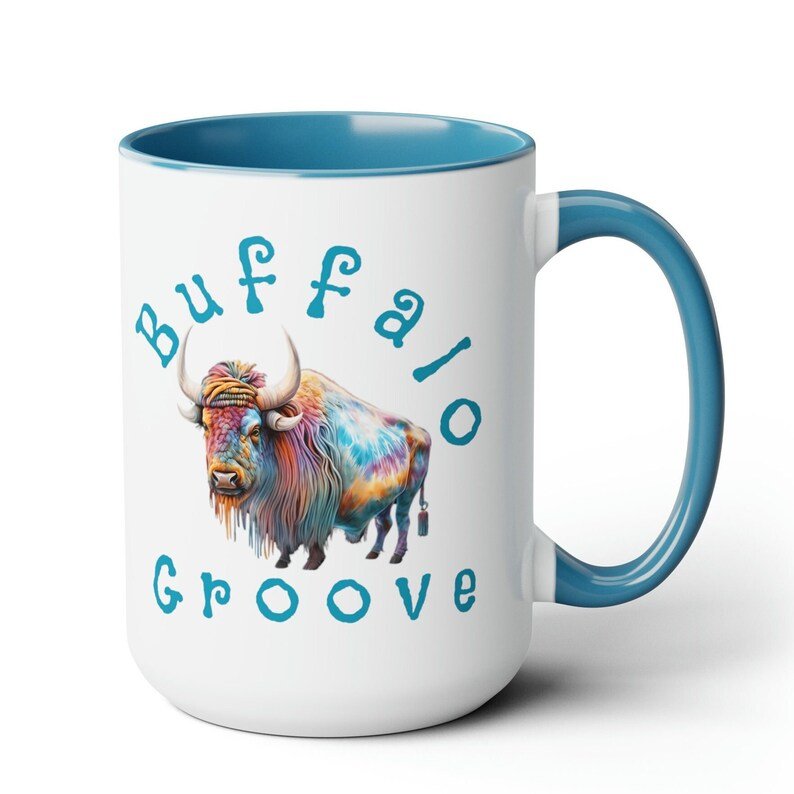
A straight cylinder gives the widest continuous print area and the most predictable registration for a full wrap. A cone or tapered body looks lighter but distorts artwork near the curve, so a flat design can look squeezed. A stackable body saves warehouse space and freight cube, at the cost of decoration space where mugs touch.
Handles matter more than buyers expect. A handle that is too small forces fingers together; one set too low makes a full mug feel unstable. Handle position also affects a wrap print, because the design has to clear the handle, which cuts the usable circumference.
| Shape | Print area | Handle | Carton cube | Best for |
|---|---|---|---|---|
| Classic cylinder | Widest continuous wrap; predictable registration | Standard C-handle, comfortable for most hands | Moderate | Retail, promotional, private label |
| Cone or tapered | Wide at the top; artwork distorts near the curve | Often smaller, set higher | Moderate to high | Café, design-led collections |
| Stackable | Reduced where bodies touch | Flush or recessed | Low | Wholesale, space-saving programs |
| Commuter with lid | Band print below the lid line | Large, often ergonomic | High, with lid and box | Travel, office, gifting |
| Latte bowl | Wide bowl; the wrap curves sharply | Small, balanced for the bowl | High | Café service, latte and cappuccino |
The coffee mugs range covers the straight and tapered bodies most programs use, and the latte and cappuccino cups show the bowl shapes that suit milk drinks.
Print-area and handle questions come up in most of our design and structure articles, which is where the specification work usually starts.
4. Match the body to the drink menu
At a glance: start with the drink, not the mug: serve volume, foam and ice decide the size, and the size decides the body and the carton.
A café that sells 6 oz flat whites and 12 oz lattes needs two bodies, not one compromise. A retailer selling boxed gift sets may need a smaller body that keeps the set affordable. A corporate buyer ordering 500 pieces will usually do better with one standard 11 oz body than three sizes that split the setup.
Write the menu down before the brief: serve volume, foam, ice or lid, and how the customer holds it. That list translates into a size shortlist and makes a supplier’s recommendation checkable.
| Drink | Typical serve | Recommended labelled size | Service note |
|---|---|---|---|
| Espresso or macchiato | About 30–60 ml | 3–5 oz / 90–150 ml | A small body with a thick wall holds heat |
| Filter coffee or americano | About 250–350 ml | 11 oz / 330 ml | The default body for retail and office |
| Latte or cappuccino | About 300–450 ml | 15 oz / 450 ml | Headroom for foam; a wide bowl helps latte art |
| Tea service | About 200–300 ml | 8–11 oz / 240–330 ml | Handle comfort matters with a full cup |
| Hot chocolate | About 300–400 ml | 15 oz / 450 ml | A wide body leaves room for toppings |
| Iced long drink | About 400–600 ml | 20 oz / 590 ml | A tall body leaves room for ice |
The 8oz mugs and 20oz mugs pages bracket the range at each end, and the middle sizes are where most programs settle.
5. Why US and EU size labels differ
At a glance: US listings still lead with ounces while EU listings use millilitres, so the same body can carry two labels and two slightly different numbers.
Ounces survive in US retail because the format is familiar to shoppers; European packaging and B2B sheets are usually metric. Conversion is arithmetic, not design: 11 oz is about 330 ml, 8 oz about 240 ml, 15 oz about 450 ml and 20 oz about 590 ml. Rounding then creates the variation you see between listings.
The practical fix is to publish both figures and state which is nominal. If your listing says 11 oz and the spec sheet says 330 ml, a customer cannot tell whether the gap is rounding or a different body. A spec sheet that names the mould and the fill line removes the doubt. Label rules vary by market, so confirm the units and tolerances with your packaging or compliance team. The by-size collection groups the range in both formats.
6. How to measure before you approve
At a glance: measure the fired sample the way the customer will use it, and write the numbers into the approval so production has a target.
- Fill to the intended line, about 1 cm below the rim, and measure the volume in millilitres.
- Weigh the empty mug; weight predicts carton weight and freight.
- Check the handle with a full mug: grip, balance and finger clearance.
- Compare the print area with the artwork at actual size, including the handle gap.
- Pack the sample in the proposed carton and drop-test it.
Do this on a fired sample, not a drawing: the body shrinks in the kiln and the fired capacity is what the customer receives. Our factory walkthrough explains where that shrinkage happens.
Colour belongs in the same approval. Compare the decoration with the approved Pantone reference under consistent light, because a print that matches on a phone screen can still sit two ΔE steps away from the sample.
7. Mixing sizes and designs in one order
At a glance: mixed designs can share a production run, but each design keeps its own setup and packaging, so confirm the per-design minimum in the quote.
The standard MOQ is 500 pieces per design for standard bodies. Different designs can be combined to reach a volume tier, and sample orders can be placed below the production MOQ. What does not combine freely is tooling: a new mould, a custom shape or a bone china body may carry a higher minimum, confirmed at quotation.
Mixed sizes behave differently from mixed designs. Two sizes mean two sets of cartons, two packing specifications and often two print setups. If you need 11 oz and 15 oz in one program, ask for a combined quote that shows the carton count and the freight cube, not just the unit price.
How MugFactory de-risks size specification
MugFactory produces ceramic, bone china and stoneware mugs on exclusive Liling lines, with design, packaging, QA and export documents handled in-house. For a size decision, that means the body, the print area and the carton can be checked against one specification instead of three suppliers’ assumptions.
- A free digital mockup within one hour of a complete brief, so artwork can be checked before a sample is made.
- Physical samples in 7–10 days after artwork approval, with the sample fee credited against the production order.
- Master-sample approval before production, with capacity measured on the fired body and print position checked.
- In-process ΔE readings, print-position checks and kiln records logged per batch, so drift is caught before packing.
- A standard MOQ of 500 pieces per design, with mixed designs sharing a run and sample orders accepted below the MOQ.
Test the body and the finish first
Capacity, weight and print area are easier to judge in the hand than on a spec sheet. Tell us the drinks you serve and the quantity, and we will recommend a body and send a sample.
FAQ
Is an 11 oz mug really 11 oz of coffee?
Rarely. The 11 oz figure is a nominal brimful capacity, so a mug filled to a sensible line below the rim holds less than 330 ml. Add foam or leave room to carry it and the usable fill drops again. Measure your sample to the fill line you intend to use, then write that number into the specification.
What is the difference between brimful and usable capacity?
Brimful capacity is measured to the very edge of the rim; usable capacity is measured to the fill line a customer would actually use, usually about 1 cm lower. Usable capacity matters for drink menus, packaging claims and customer expectations, and it should be confirmed on a fired sample.
Why do US and EU mug sizes differ?
US retail still sells mugs in ounces while European listings and B2B sheets usually use millilitres. The underlying body can be the same; only the rounding differs. Publish both figures, state which is nominal and confirm the labelling rules for your market with your packaging team.
Can we mix sizes in one order?
Yes. Mixed designs on standard bodies can share a production run, and sample orders can sit below the MOQ. Mixed sizes add cartons and packing specifications, so ask for a quote that separates the unit price from the packaging and freight effect of each size.
Which size sells best for retail?
There is no universal bestseller. An 11 oz body is the safest default for retail and promotional ranges, while 15 oz suits café and gifting and 20 oz suits commuter and iced-drink concepts. Look at the drinks your customer makes, then test two sizes before committing a season.
Sources

MugFactory’s sourcing and production team helps brands, retailers and distributors plan custom ceramic mug programs from 500-piece pilots to annual production. Based in Liling, close to the lines, the team covers design, packaging, QA, export documents and after-sales.